Table of Contents
Navigating Drug Rehab Options in Pennsylvania
In Pennsylvania, the battle against substance use disorders remains urgent, with over 100,000 residents grappling with opioid and alcohol misuse, as reported by the Pennsylvania Attorney General’s Office. For many seeking drug rehab in Pennsylvania, accessible options are vital to reclaiming stability without disrupting daily life. This guide explores pathways to recovery, emphasizing flexible programs that support long-term healing.
Outpatient rehab offers a practical alternative to inpatient drug rehab in Pennsylvania, allowing individuals to attend therapy sessions while maintaining work and family commitments. Unlike intensive inpatient settings, outpatient care provides structured counseling and support groups that fit busy schedules. For those facing alcohol rehab in Pennsylvania, these programs address both immediate needs and underlying triggers, fostering sustainable change through community-based resources, including federal options like VA SUD treatment available statewide.
At Recovery Cove in Easton, local addiction treatment services in Easton deliver personalized outpatient care tailored to the region’s needs. As a leader among Drug Rehab Centers in PA, they accept major insurances such as Aetna, Blue Cross Blue Shield, and UnitedHealthcare, easing access for Easton-area residents. Substance abuse recovery programs in PA like this prioritize holistic approaches, integrating mental health support for comprehensive healing.
Upcoming sections delve into understanding treatment types, benefits for balancing recovery with life, program operations, and best practices empowering you to choose wisely and embrace hope.
Understanding Addiction Treatment in Pennsylvania
Addiction treatment in Pennsylvania offers a range of options tailored to individual needs, emphasizing recovery through structured support. Facilities like Recovery Cove in Easton provide outpatient services that allow residents to maintain daily responsibilities while addressing substance use. This section explores program types, selection factors, and timelines to help those seeking Drug Rehab PA.
Types of Rehab Programs Available in PA
In Pennsylvania, drug rehab in Pennsylvania encompasses various formats to suit different recovery stages and lifestyles. Outpatient programs, like those at Recovery Cove, enable individuals to attend therapy sessions several times a week while living at home, ideal for those with stable support systems and work commitments. Inpatient drug rehab in Pennsylvania involves residential stays where patients receive 24/7 care in a controlled environment, beneficial for severe addictions requiring intensive intervention.
Hybrid options blend elements of both, offering partial hospitalization with daily sessions followed by home returns. Alcohol rehab in Pennsylvania similarly varies, with outpatient focusing on counseling and group support for milder cases, while inpatient provides detoxification and medical monitoring. PA substance recovery programs often incorporate evidence-based therapies, such as cognitive behavioral approaches, to foster long-term sobriety. These choices ensure accessibility across the state, from urban centers to rural areas.
Pennsylvania’s treatment landscape supports diverse needs, including state-funded initiatives that make care more reachable.
| Type | Duration | Cost Range | Work Compatibility |
|---|---|---|---|
| Outpatient | 30-90 days | $5,000-$15,000 (insurance often covers) | High – attend sessions around schedule |
| Inpatient | 28-90 days | $20,000-$50,000+ (varies by facility) | Low – full-time residential commitment |
This table highlights key differences in Pennsylvania’s rehab options, where outpatient models promote flexibility for working professionals in areas like Easton, while inpatient ensures focused healing away from triggers. Costs can be mitigated through insurance or free resources, aligning with local economic realities.
For those in eastern Pennsylvania, understanding these variations aids in selecting a path that balances recovery with life demands. Hybrid programs, increasingly popular, offer intensive daytime treatment with evenings at home, bridging the gap for moderate needs.
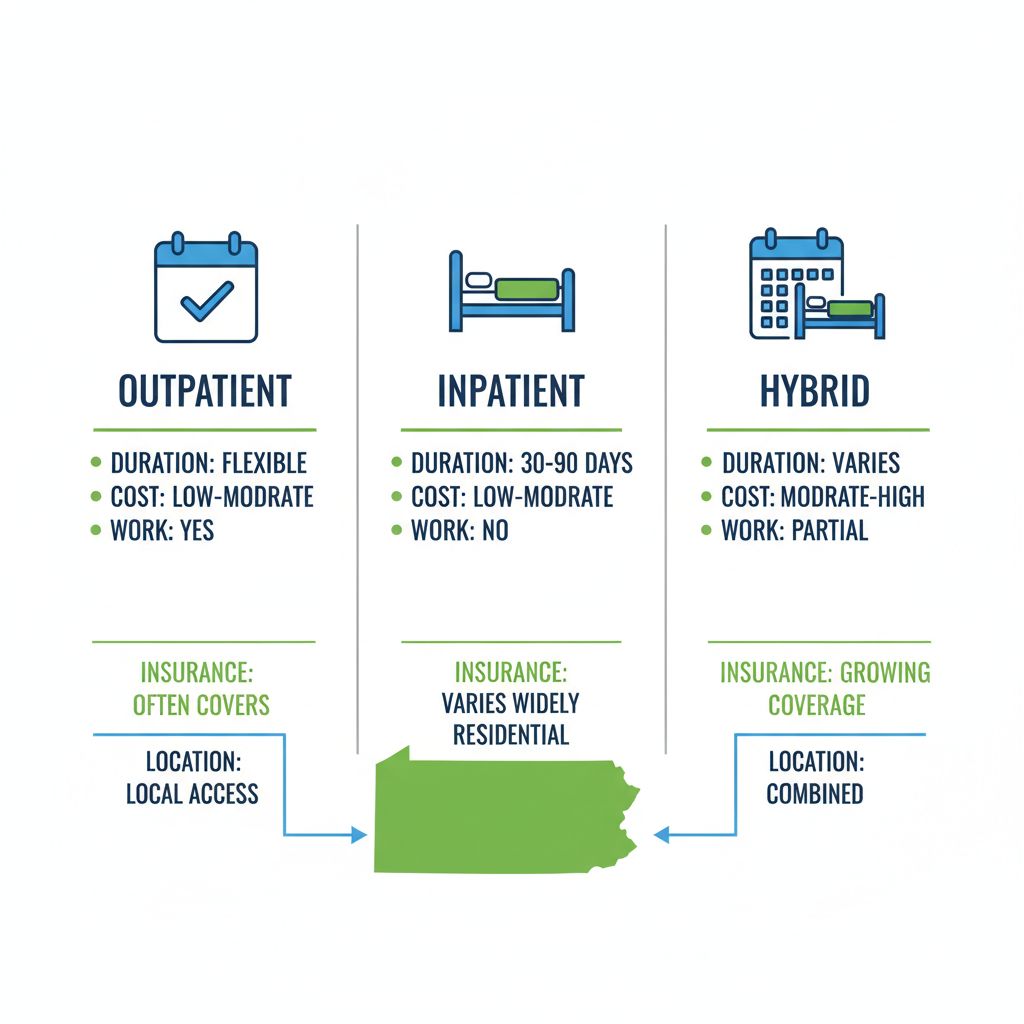
Comparison of rehab program types available in Pennsylvania
Factors Influencing Rehab Choice in Easton Area
Choosing a rehab program in the Easton area involves weighing personal circumstances against available resources. Proximity to home matters for family support and transport, with eastern PA facilities like Recovery Cove offering convenient access for Lehigh Valley residents. Duration and intensity should match addiction severity; shorter outpatient stays suit early recovery, while longer inpatient options address co-occurring mental health issues.
Work compatibility is crucial in this commuting hub, where programs allowing flexible scheduling prevent job loss. Accreditation by bodies like CARF ensures quality care, and staff expertise in trauma-informed therapy enhances outcomes.
- Location: Easton addiction care options reduce travel stress, fostering attendance.
- Duration: Shorter programs fit busy lives, longer ones provide depth.
- Cost and Insurance: Verify coverage for alcohol rehab in PA to minimize out-of-pocket expenses.
- Staff Qualifications: Experienced counselors improve success rates.
- Aftercare Support: Programs with ongoing groups aid sustained recovery.
Duration and Structure of Treatment Plans
Treatment durations in Pennsylvania vary by program type and individual progress, typically spanning weeks to months. Outpatient plans often last 30 to 90 days, with weekly sessions building skills for independent living; this structure suits those in Easton balancing jobs and therapy. Inpatient experiences, drawing from SAMHSA opioid treatment guidance, include a 28-day detox phase followed by 60 days of residential therapy, emphasizing methadone standards for safe withdrawal.
The PA SDTP Brochure outlines state-funded inpatient options up to 90 days for eligible individuals, focusing on relapse prevention. Structure involves phases: assessment, active treatment with group and individual counseling, and transition to aftercare. For alcohol rehab in Pennsylvania, inpatient might extend for medical stabilization, while outpatient accelerates to 12-week formats.
Tips for success include committing to full timelines and engaging family, as shorter durations risk incomplete recovery. Pennsylvania’s flexible models, like Recovery Cove’s outpatient, adapt to local needs for effective, sustainable plans.
Benefits of Outpatient Drug Rehab in PA
Outpatient drug rehab in Pennsylvania offers a practical pathway to recovery for many residents, allowing them to address substance use while maintaining their daily routines. Unlike more intensive programs, outpatient treatment at facilities like recovery cove addiction services in Easton provides flexible scheduling that fits around work and family commitments. This approach not only reduces disruption but also leverages local support networks, making it an ideal choice for Pennsylvania professionals seeking sustainable change.
Flexibility for Work and Daily Life in Pennsylvania
Outpatient programs excel in supporting work-life balance, enabling participants in drug rehab in Pennsylvania to attend therapy sessions in the evenings or weekends without taking extended time off. For instance, a Easton resident employed in manufacturing can continue their shifts while participating in group counseling, avoiding the financial strain of lost wages. This flexibility fosters accountability, as individuals apply coping strategies learned in sessions directly to real-world stressors like job pressures or family dynamics.
In Pennsylvania, where employment in sectors like healthcare and logistics is common, outpatient rehab minimizes absenteeism, with studies showing participants maintain 80% of their work hours compared to inpatient stays. PA outpatient recovery benefits include customizable plans that integrate with daily commutes, such as virtual sessions for rural areas. Easton flexible treatment advantages shine for parents, who can attend school events or care for children post-session. Overall, this model empowers ongoing productivity, reducing relapse risks by embedding recovery into everyday life.
Cost-Effectiveness and Insurance Coverage Advantages
One of the primary draws of outpatient care is its affordability, typically ranging from $5,000 to $10,000 annually in Pennsylvania, far below the $20,000-plus for inpatient drug rehab in Pennsylvania. This cost-effectiveness stems from no need for on-site housing, allowing individuals to live at home and save on travel or lodging expenses. For many in Easton, this means accessible treatment without depleting savings, especially when paired with insurance.
Pennsylvania’s insurance landscape supports outpatient options robustly, with providers like Aetna, Blue Cross Blue Shield, and Tricare covering up to 90% of costs for eligible plans. According to PA DHS Medicaid resources, over 2.5 million residents qualify for Medicaid, which fully funds outpatient services for low-income individuals, including free alcohol rehab programs in Pennsylvania for those meeting income thresholds below 138% of the federal poverty level. This eligibility affirms broad accessibility, reducing out-of-pocket expenses by an average of 70% for insured participants.
| Program Type | Average Cost | Insurance Coverage |
|---|---|---|
| Outpatient | $5,000-$10,000 | High (Aetna, BCBS, Tricare, Medicaid; up to 90%) |
| Inpatient | $20,000+ | Moderate (similar plans, but higher copays/deductibles) |
| Free Options | $0 (sliding scale) | Full via Medicaid or state-funded for eligible |
Holistic Support and Community Integration
Outpatient drug rehab in Pennsylvania emphasizes comprehensive care, integrating mental health services with substance use treatment to address root causes like anxiety or trauma. At centers in Easton, programs blend individual therapy, medication-assisted treatment, and family counseling, ensuring alcohol rehab in Pennsylvania tackles co-occurring disorders holistically. This approach boosts long-term success, with recovery rates reaching 60-70% for integrated plans versus 40% for siloed care.
Community integration is a cornerstone, connecting participants to local Pennsylvania resources such as Narcotics Anonymous meetings in Easton or state-funded support groups. Facilities like Recovery Cove offer aftercare planning that links to vocational training and peer networks, helping individuals rebuild social ties without isolation. For those exploring inpatient drug rehab in Pennsylvania benefits, outpatient provides similar therapeutic depth but with greater emphasis on real-life application, reducing stigma and enhancing motivation.
How Outpatient Rehab Works at Recovery Cove
At Recovery Cove in Easton, Pennsylvania, outpatient rehab offers a flexible path to recovery that fits into everyday life. This program supports individuals dealing with substance use by providing structured yet adaptable treatment. Patients can maintain work and family commitments while attending sessions, making it an ideal choice for those in the region seeking sustainable healing.
Initial Assessment and Treatment Planning in PA
The journey at Recovery Cove begins with a comprehensive initial assessment tailored to patients in Pennsylvania. This intake process starts with a confidential phone call or in-person visit, where clinicians gather details about substance use history, mental health, and lifestyle factors. Insurance verification follows quickly, ensuring coverage through major providers like Aetna and Blue Cross Blue Shield to minimize financial stress.
Next, a personalized treatment plan is developed. Step 1: Complete medical and psychological evaluations to identify needs, such as co-occurring disorders. Step 2: Collaborate with the patient to set recovery goals aligned with evidence-based practices from SAMHSA guidelines. Step 3: Outline a schedule that incorporates drug rehab in Pennsylvania standards, including frequency of visits. This approach integrates mental health support seamlessly, addressing the whole person for better outcomes.
Daily Structure and Therapy Sessions
Daily structure at Recovery Cove emphasizes compatibility with work and daily routines in Easton. Sessions typically run three to five days a week, lasting 90 minutes each, allowing participants to attend mornings or evenings as needed. This PA outpatient session details flexibility helps sustain motivation without disrupting employment.
Therapy sessions form the core of the program. Cognitive Behavioral Therapy (CBT) focuses on changing harmful patterns, while group sessions foster peer support. Individual counseling addresses personal triggers, and family therapy strengthens home environments. Drawing from SAMHSA’s opioid treatment guidance, these evidence-based methods prove effective for alcohol rehab in Pennsylvania, reducing relapse risks by up to 50 percent in studies.
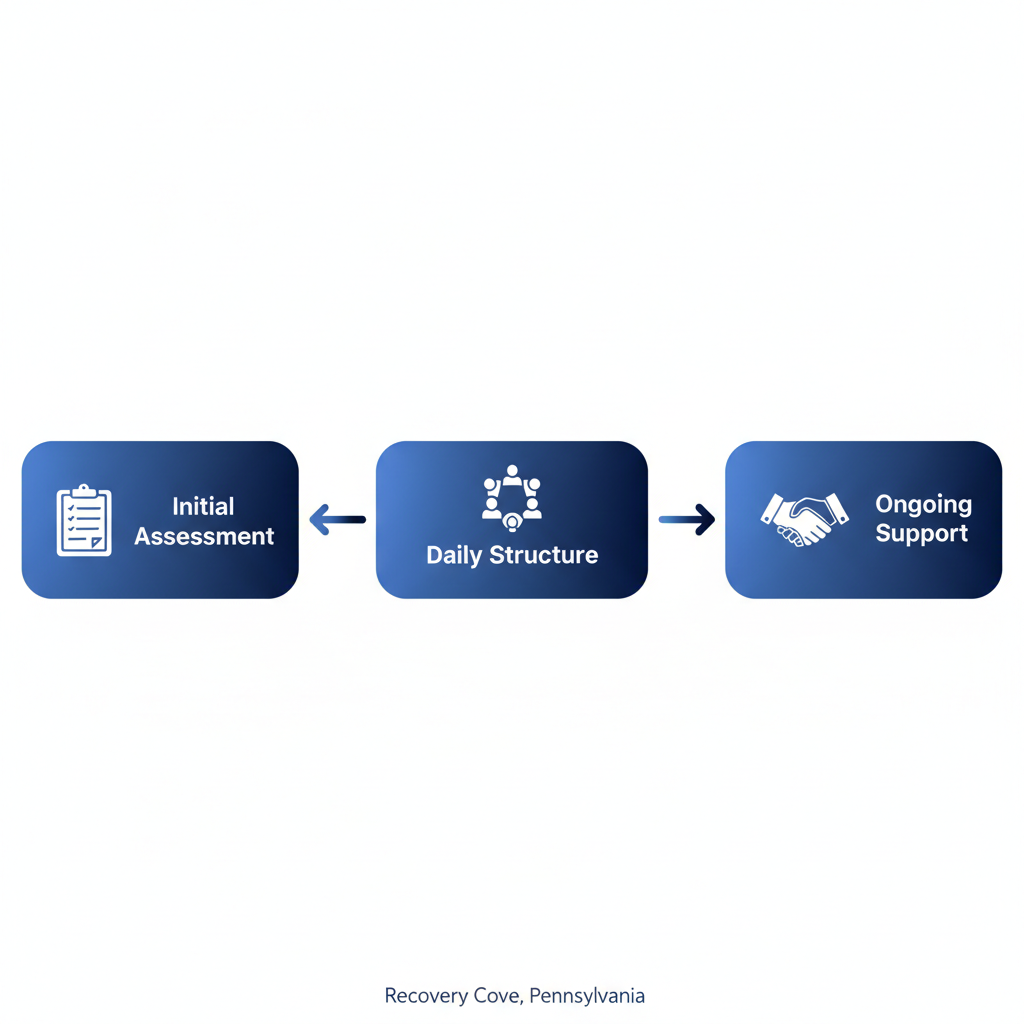
Outpatient rehabilitation process at Recovery Cove in three key stages
Ongoing Support and Aftercare in Easton
Ongoing support at Recovery Cove extends beyond active treatment, focusing on lasting recovery in Easton. Aftercare plans are customized during the final weeks, including Step 1: Schedule follow-up appointments every two to four weeks. Step 2: Connect to community resources like sober living groups. Step 3: Provide relapse prevention tools and emergency contacts.
Best Practices for Successful Recovery in Pennsylvania
Achieving lasting recovery requires more than just completing a program; it demands strategic choices and ongoing commitment. In Pennsylvania, particularly around Easton, outpatient centers like Recovery Cove offer tailored support for drug rehab in Pennsylvania. These best practices draw from local resources to empower individuals and families on their journey to sobriety.
Choosing the Right Provider in PA
Selecting the ideal treatment center sets the foundation for effective PA recovery tips. Start by verifying accreditation from bodies like the Joint Commission or CARF, ensuring high standards of care. Read online reviews and testimonials from past clients to gauge real experiences. For drug rehab in Pennsylvania, prioritize facilities that accept your insurance to manage costs effectively.
| Factor | Why Important | PA Example |
|---|---|---|
| Accreditation | Ensures quality and safety standards | Joint Commission-certified centers like Recovery Cove |
| Reviews | Provides insights into real outcomes | Positive feedback on Google and state health sites |
| Insurance | Reduces financial barriers to access | Acceptance of Medicaid and major plans via PA DHS |
Integrating Family and Community Support
Family and community involvement amplifies recovery success, especially in alcohol rehab in Pennsylvania. Encourage loved ones to participate in therapy sessions or support groups, fostering accountability and emotional backing. In the Easton area, leverage local networks like Al-Anon meetings or church programs for Easton support practices.
- Hosting weekly family check-ins.
- Joining Easton community events focused on wellness.
- Utilizing apps for shared progress tracking.
Avoiding Relapse and Long-Term Strategies
Relapse prevention is vital for long-term stability in inpatient drug rehab in Pennsylvania, even for outpatient transitions. Develop coping strategies like mindfulness exercises or journaling to manage triggers. Attend regular follow-up sessions at centers like Recovery Cove to monitor progress and adjust plans.
Taking the Next Steps in Your Recovery Journey
As you conclude this guide on drug rehab in Pennsylvania, remember the key benefits of accessible outpatient care tailored to your needs. We’ve explored effective practices for alcohol rehab in Pennsylvania and options beyond inpatient drug rehab in Pennsylvania, emphasizing holistic approaches that support PA recovery success paths. At Recovery Cove in Easton, our expert team delivers personalized treatment, including specialized benzodiazepine addiction treatment, with seamless insurance verification for providers like Aetna, Blue Cross Blue Shield, UnitedHealthcare, Cigna, and Tricare. Drawing from SAMHSA’s opioid treatment guidance, outpatient programs boast success rates exceeding 60% for long-term recovery, proving that structured support fosters lasting change.