Table of Contents
- Healing Trauma and Addiction with EMDR Therapy
- The Foundations of EMDR Therapy for Substance Use Treatment
- How EMDR Therapy Processes Trauma and Reduces Cravings
- Incorporating EMDR into Outpatient Addiction Treatment Programs
- Integrating EMDR with Dual Diagnosis and Trauma-Informed Care
- Your Questions About EMDR Therapy for Addiction Recovery Answered
- Take the Next Step with EMDR Therapy at Recovery Cove
Healing Trauma and Addiction with EMDR Therapy
Many individuals struggling with addiction have experienced trauma that underlies their substance use. EMDR therapy offers a path to healing by reprocessing those painful memories and breaking the cycle of addiction.
At Recovery Cove, we integrate EMDR therapy into our holistic addiction treatment to address both the symptoms and root causes of substance use. This evidence-based therapy uses bilateral stimulation — guided eye movements, taps, or tones — to help the brain process and reframe traumatic memories. By reducing the emotional charge attached to these memories, EMDR helps lessen cravings and relapse triggers. Our trauma informed outpatient care includes EMDR as a core treatment, ensuring that individuals receive targeted support for past experiences.
Because we recognize the strong connection between trauma and substance use disorders, our dual diagnosis treatment addresses co-occurring mental health concerns alongside addiction. EMDR is integrated into our Partial Hospitalization Program (PHP) and Intensive Outpatient Program (IOP) and works alongside other therapies like cognitive behavioral therapy (CBT) and medication-assisted treatment (MAT) to provide whole-person healing.
We believe in treating the whole person, and EMDR is one of many evidence-based therapies we offer to support lasting recovery. If you’re ready to explore how EMDR can help, reach out to our team to learn more about our programs.
The Foundations of EMDR Therapy for Substance Use Treatment
Unresolved trauma often lies at the heart of substance use disorders, fueling cycles of emotional pain and cravings that can feel impossible to break. EMDR therapy is an evidence-based approach that directly addresses these underlying wounds, helping individuals reprocess distressing memories and reduce their power over addictive behaviors. At Recovery Cove, we see how healing trauma can transform the recovery journey.
What Is EMDR Therapy?
Originally developed to treat post-traumatic stress disorder, EMDR is a structured, eight-phase psychotherapy that has been adapted for substance use disorders. During sessions, we use bilateral stimulation—such as guided eye movements, gentle taps, or tones—to help the brain reprocess traumatic memories, reducing the emotional charge that often triggers substance use. The therapy is client-led: we guide the process, but you are always in control, never forced to relive painful details. This makes EMDR particularly effective for people who struggle with traditional talk therapies.
The eight phases of EMDR work together to provide a complete healing framework, from preparation to lasting recovery:
| Phase | Description | Purpose in Recovery |
|---|---|---|
| History Taking | Collects client history and identifies target memories | Establishes baseline and treatment focus for addiction |
| Client Preparation | Teaches coping skills and explains the EMDR process | Builds trust and reduces anxiety before trauma processing |
| Assessment | Identifies specific traumatic memories and associated negative beliefs | Connects trauma triggers to substance use patterns |
| Desensitization | Uses bilateral stimulation to reprocess traumatic memories | Reduces emotional charge of memories, lessening cravings |
| Installation | Strengthens positive beliefs to replace negative ones | Builds self-efficacy and resilience in sobriety |
| Body Scan | Checks for residual tension or physical distress | Ensures complete processing and holistic healing |
| Closure | Brings client to equilibrium after each session | Maintains stability between sessions and prevents relapse triggers |
| Reevaluation | Assesses progress and identifies new targets | Supports ongoing recovery and continued trauma processing |
Phases 1 through 3 build a strong foundation: we gather your history, teach coping skills, and identify the specific memories that link trauma to substance use. In Phases 4 through 6, bilateral stimulation helps reprocess those memories, replace negative beliefs with positive ones, and release physical tension. Phases 7 and 8 ensure stability between sessions and track progress over time. This sequence lets the brain heal naturally, without requiring extensive verbal recounting of traumatic events. EMDR is a powerful tool within the broader framework of trauma focused therapy for addiction, which addresses the root causes of substance use.
Our team at Recovery Cove believes true healing happens when we treat the whole person, not just the addiction symptoms. That’s why we combine EMDR with a trauma informed outpatient care model that integrates evidence-based therapies like CBT and MAT, along with dual diagnosis treatment for co-occurring mental health conditions. For individuals in Easton, PA and across the Lehigh Valley, we offer a safe, supportive environment where you can rebuild your life—mind, body, and spirit.
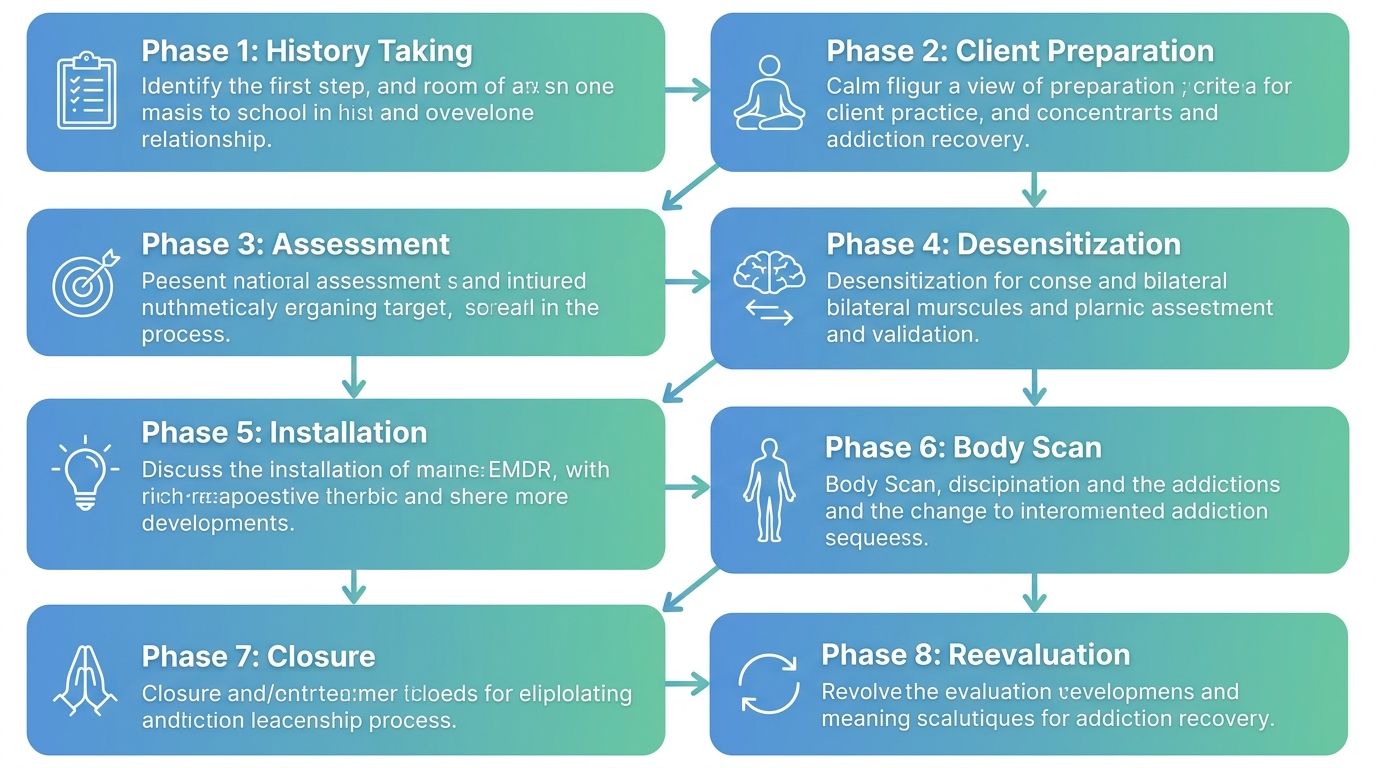
8 phases of EMDR therapy for substance use treatment
Heal. Grow. Connect. Live. — these are the principles that guide every aspect of our program. While EMDR is one of our most effective tools, it is just one part of a comprehensive treatment plan that also includes individual therapy, group support, and holistic practices. Unlike some other modalities, EMDR does not require extensive verbal processing of trauma details, which can be especially liberating. If you’re ready to explore trauma-focused care in a compassionate outpatient setting, we invite you to learn more.
How EMDR Therapy Processes Trauma and Reduces Cravings
One highly effective way to address trauma is through EMDR therapy, a structured, evidence-based method that targets the root causes of addiction. This approach doesn’t just manage symptoms — it helps the brain heal from past experiences, reducing the emotional pull that fuels substance use.
The Science Behind EMDR’s Effect on Trauma Memories
EMDR, or Eye Movement Desensitization and Reprocessing, uses bilateral stimulation — such as guided eye movements, taps, or tones — to engage both hemispheres of the brain. This process helps reprocess traumatic memories that are often stored in the limbic system, where they can remain intense and easily triggered. As the EMDR therapy sessions progress, the brain’s natural healing capacity is activated, allowing the memory to be stored in a way that no longer feels immediately threatening.
Our team at Recovery Cove explains that this bilateral stimulation works like the brain’s own information-processing mechanism during REM sleep. By revisiting a traumatic memory while staying grounded in the present, a client can reduce the memory’s emotional charge. Over time, the distressing images, sounds, or feelings associated with the trauma lose their power to provoke a fight-or-flight response. This desensitization allows you to recall difficult memories without the intense emotional reaction that once drove substance use. In many cases, significant relief can be achieved in 6 to 12 sessions, often providing faster results than traditional talk therapies. EMDR is supported by the American Psychological Association (APA) and VA/DoD guidelines for treating PTSD, which underscores its clinical credibility.
We integrate EMDR with other evidence-based modalities like Cognitive Behavioral Therapy (CBT) and Medication-Assisted Treatment (MAT) as part of a whole-person plan, ensuring that trauma therapy is always tailored to the individual’s needs.
EMDR vs. Traditional Talk Therapy for Trauma
It’s helpful to contrast EMDR with conventional talk therapy to understand why it’s so well suited for trauma-driven cravings. The following table highlights key differences:
| Aspect | EMDR Therapy | Traditional Talk Therapy |
|---|---|---|
| Mechanism | Bilateral stimulation (eye movements, taps) to reprocess memories | Verbal exploration and cognitive restructuring |
| Duration of treatment | Often 6–12 sessions, may see faster relief | Varies widely; typically longer-term |
| Efficacy for PTSD | Strong evidence (APA, VA/DoD guidelines) | Effective, especially CBT and exposure therapy |
| Integration with addiction treatment | Designed to process trauma triggers for cravings and relapse | Can be adapted but may not directly address trauma reprocessing |
EMDR’s design to target trauma triggers directly makes it a powerful complement to addiction care. For those with co-occurring mental health conditions, our approach includes comprehensive dual diagnosis treatment, ensuring that both the substance use disorder and underlying trauma or anxiety are treated together.
Reducing Cravings and Strengthening Relapse Prevention
Unresolved trauma keeps the brain in a heightened state of alert, often leading individuals to self-soothe with substances. When EMDR helps the brain reprocess these painful memories, the emotional intensity behind the cravings diminishes. According to Recovery Cove’s internal findings, integrating trauma therapy into outpatient care directly addresses the root causes of addiction, which significantly reduces the risk of relapse. By neutralizing the triggers stored in the limbic system, EMDR breaks the cycle that links past pain to present substance use.
We believe in treating the whole person, not just the symptoms of addiction. That’s why we embed EMDR into our trauma informed outpatient care as part of a holistic approach. Our trauma focused therapy for addiction directly addresses the root causes of cravings, giving you the tools to heal the past and build a foundation for lasting recovery. You are not alone and this is not the end of your story. Through compassionate, evidence-based practices, we create a safe space where you can Heal. Grow. Connect. Live.
Results may vary, but many clients report a significant decrease in craving intensity after completing trauma processing. As the brain’s threat response quiets, the urge to self-medicate often fades, strengthening your ability to maintain sobriety. By addressing the underlying pain rather than just the addictive behavior, EMDR helps you develop healthier coping strategies and a more resilient relapse prevention plan.
Understanding these mechanisms prepares us to explore how our trauma-informed outpatient care integrates EMDR into a comprehensive treatment plan, ensuring that every step you take is grounded in whole-person healing.
Incorporating EMDR into Outpatient Addiction Treatment Programs
Bringing EMDR into an outpatient setting requires a thoughtful approach. At Recovery Cove, we weave EMDR therapy into our existing programs to offer comprehensive trauma-focused care without disrupting clients’ daily lives. The table below outlines how EMDR is available at each level of care.
EMDR Availability Across Outpatient Levels of Care
| Program Level | Schedule | EMDR Integration |
|---|---|---|
| Partial Hospitalization Program (PHP) | Weekdays, several hours daily | Yes — individual EMDR sessions included in clinical hours |
| Intensive Outpatient Program (IOP) | 3–4 evenings per week | Yes — flexible scheduling for EMDR within treatment plan |
| Standard Outpatient (OP) | 1–2 sessions per week | Yes — EMDR available as individually scheduled sessions |
This integration ensures that clients at all stages of recovery can access trauma therapy that fits their schedule and life responsibilities.
Availability of EMDR in Intensive Outpatient and Partial Hospitalization Programs
Yes, EMDR is fully integrated into both our Partial Hospitalization Program (PHP) and Intensive Outpatient Program (IOP). In PHP, which runs weekdays for several hours daily, individual eye movement desensitization and reprocessing (EMDR) sessions are woven directly into the clinical schedule. Our IOP meets 3–4 evenings per week, providing flexible windows for EMDR so that clients can attend work or school. For those in standard outpatient (OP) care, EMDR is available as individually scheduled sessions typically 1–2 times per week. Our trauma-informed outpatient care includes EMDR as a core component, ensuring that every client has access to evidence-based support. Many clients find that addressing underlying trauma through EMDR helps reduce cravings and strengthens their recovery.
Insurance Coverage for EMDR and Trauma-Focused Therapy
Most major health insurance plans cover EMDR therapy when it is part of a medically necessary addiction treatment program. At Recovery Cove, we accept plans from Aetna, Cigna, Blue Cross/Blue Shield, and UnitedHealthcare, among others. We accept insurance plans that cover SAMHSA behavioral health services, ensuring our clients have access to comprehensive, trauma-informed care. Insurance often covers dual diagnosis treatment, including EMDR for underlying trauma. Our team makes the verification process simple: you provide your insurance information, and we check your coverage for EMDR and trauma-focused therapy before your first session, so there are no surprises.
Steps to Begin EMDR Therapy in the Lehigh Valley
Taking the first step toward healing is straightforward. If you’re located in Easton, Allentown, Bethlehem, or anywhere in the Lehigh Valley, our team in Easton is ready to help. The process includes four simple stages:
- Initial call: Reach out to Recovery Cove at 484-549-2683 to discuss your needs and schedule a comprehensive assessment.
- Clinical assessment: A licensed therapist evaluates your trauma history, substance use, and mental health to understand your situation.
- Personalized treatment plan: We work with you to develop a plan that integrates EMDR, group therapy, and any additional services like medication management.
- Start therapy: Once your plan is in place, you begin EMDR sessions, with ongoing adjustments as you progress.
While results may vary, many of our clients experience significant relief and renewed hope. You are not alone and this is not the end of your story. Call us today at 484-549-2683 to schedule your assessment. Heal. Grow. Connect. Live.
Integrating EMDR with Dual Diagnosis and Trauma-Informed Care
When we integrate EMDR therapy into a dual diagnosis treatment program, we address the traumatic memories that so often fuel substance use. At Recovery Cove, we view substance use as a symptom of deeper emotional wounds, and addressing those wounds requires a treatment environment grounded in compassion and respect. A trauma-informed care framework—built on safety, trustworthiness, choice, collaboration, and empowerment—is essential for individuals with co-occurring addiction and mental health conditions. According to the Substance Abuse and Mental Health Services Administration (SAMHSA), evidence-based integrated treatment that addresses both trauma and substance use simultaneously leads to better outcomes. As Recovery Cove’s clinical approach emphasizes, no single modality is a standalone solution; instead, a comprehensive plan that combines EMDR with other evidence-based practices allows clients to heal at every level. Within a dual diagnosis treatment plan, we pair trauma reprocessing with medication-assisted treatment and cognitive behavioral therapy to stabilize the body and reframe harmful thought patterns, creating a solid foundation for recovery.
The following table illustrates how each modality contributes to a holistic, whole-person approach:
EMDR in a Dual Diagnosis Treatment Plan
| Modality | Focus | How It Supports Recovery |
|---|---|---|
| Medication-Assisted Treatment (MAT) | Reduces withdrawal and cravings with FDA-approved medications | Stabilizes clients physically, enabling deeper trauma work via EMDR |
| Cognitive Behavioral Therapy (CBT) | Restructures maladaptive thought patterns and coping strategies | Complements EMDR by addressing cognitive distortions that maintain addiction |
| EMDR Therapy | Reprocesses traumatic memories through bilateral stimulation | Directly targets trauma triggers, reducing underlying causes of substance use |
| Holistic Therapies (mindfulness, yoga, art) | Promotes whole-person wellness and stress reduction | Supports emotional regulation and self-awareness, enhancing EMDR outcomes |
By blending EMDR, MAT, CBT, and holistic practices, our trauma informed outpatient care model treats the whole person rather than just the symptoms. We believe in treating the whole person—mind, body, and spirit—which is why we integrate these modalities under one roof. This multidisciplinary approach not only reduces the immediate distress of triggers and cravings but also equips clients with lifelong coping skills. When trauma is addressed at its core, clients are empowered to move beyond survival mode and into a purposeful, connected recovery. This integrated path helps clients reclaim their lives and build the resilience needed for long-term sobriety.
Your Questions About EMDR Therapy for Addiction Recovery Answered
As we’ve seen, EMDR is a powerful trauma-focused therapy. Here are answers to some common questions.
What is EMDR therapy and how does it help with addiction recovery?
Eye Movement Desensitization and Reprocessing (EMDR) uses bilateral stimulation to reprocess traumatic memories that fuel addiction. We use it to address root causes.
Is EMDR therapy effective for treating trauma related to substance use?
Studies indicate EMDR therapy can reduce PTSD symptoms and cravings. We follow the ethical guidelines set by NAADAC addiction professional association when delivering this trauma therapy. Results vary.
Can EMDR be combined with other treatments like MAT or therapy?
Yes, EMDR is part of our holistic approach, combining trauma informed outpatient care with individual therapy, medication-assisted treatment, and dual diagnosis treatment. Results may vary; consult a healthcare professional to see if EMDR is right for you. Heal. Grow. Connect. Live.
Take the Next Step with EMDR Therapy at Recovery Cove
You’ve learned how EMDR therapy can break the cycle of trauma and addiction. At Recovery Cove, we provide EMDR as part of a holistic approach, treating the whole person. Our trauma informed outpatient care integrates EMDR to address root causes, and dual diagnosis treatment pairs EMDR with psychiatric support for co-occurring conditions. With flexible PHP and IOP evening schedules in Easton, PA, we make EMDR accessible. Contact us today at 484-549-2683 or verify your insurance online to begin your EMDR therapy journey. You are not alone and this is not the end of your story. Heal. Grow. Connect. Live. Results may vary.