Table of Contents
- Prioritizing First Responders’ Mental Health in Easton, Pennsylvania
- Unique Mental Health Challenges Faced by First Responders
- Recovery Cove’s First Responder Program Overview
- PHP and IOP Options for First Responder Mental Health
- Addiction Treatment Modalities for First Responders
- Accessing Mental Health Support at Recovery Cove
- Next Steps for First Responder Mental Health Support
- Resources
Prioritizing First Responders’ Mental Health in Easton, Pennsylvania
In Easton, Pennsylvania, first responders mental health demands urgent local action. Our police, firefighters, and EMS personnel face high PTSD and burnout rates, with industry estimates showing 20-30% affected in small-city high-stress roles like flood responses here.1
Recovery Cove’s first responder program provides confidential counseling, peer support groups every Thursday, and trauma-informed therapy for Pennsylvania responders. As a specialized internal program, we offer outpatient care for work-related stress right in Easton, Pennsylvania, helping emergency workers heal and return stronger.1
SAMHSA delivers authoritative federal technical assistance for disaster responders’ behavioral health, including crisis protocols and resilience training via the Disaster Technical Assistance Center—perfect for Easton’s local scenarios.2
Easton leaders, prioritize first responder psychological support by funding these vital initiatives. We believe in treating the whole person. Implementing these supports starts with community commitment today.
Unique Mental Health Challenges Faced by First Responders
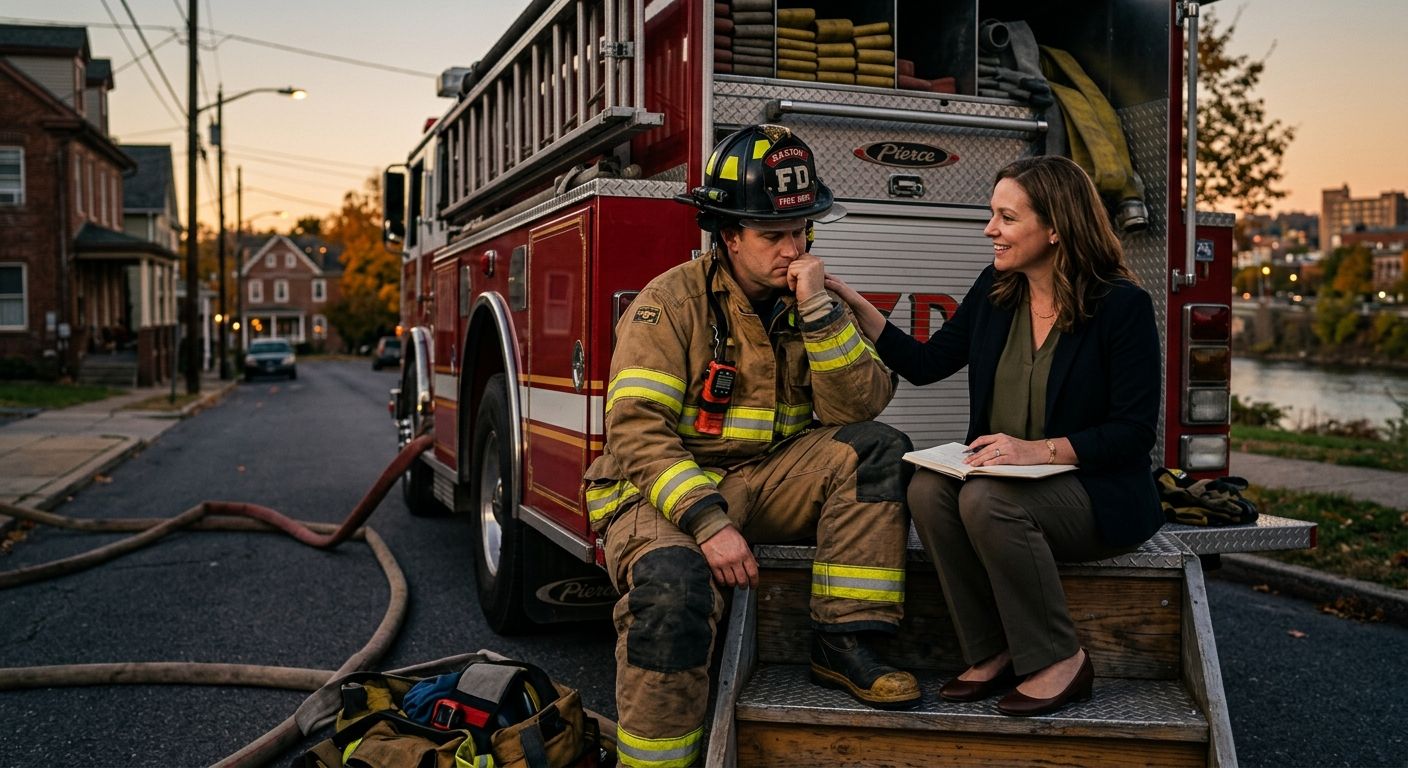
While mental health affects everyone, first responders face amplified risks due to their frontline exposures. Paramedics, firefighters, and police officers encounter first responders mental health challenges that set them apart. We see this daily at Recovery Cove in Easton, Pennsylvania, where our First Responder Program supports these heroes. Repeated trauma from high-stress incidents leads to profound psychological strain. This reality demands targeted, accessible care.
Cumulative trauma exposure stands out as a core issue. First responders regularly witness death, injury, and violence, heightening risks for PTSD and acute stress disorder. According to the Pennsylvania Department of Health, as authoritative state-level guidelines for EMS personnel mental health, these encounters demand resilience-building tools like peer support. Beyond PTSD, another prevalent issue is secondary traumatic stress and compassion fatigue. Empathizing with victims’ suffering over time drains emotional reserves, impacting mental health struggles among first responders. The Pennsylvania toolkit highlights training, peer support hotlines, and Critical Incident Stress Management teams as practical responses deployed quickly after incidents to reduce long-term harm and improve recovery.
Organizational demands compound these risks. Shift work disrupts sleep, while stigma around seeking help persists in high-stakes roles. The Substance Abuse and Mental Health Services Administration (SAMHSA), as federal evidence-based trauma intervention guidelines, stresses trauma-informed approaches to foster healing and resilience in high-risk professions. Operational pressures, limited debriefing, and inadequate staffing can inhibit timely treatment and increase turnover, gradually eroding team morale, service quality, and community safety over time.
- Elevated burnout from relentless demands
- Higher substance use disorders as coping mechanisms
- Increased suicide rates compared to the general population
These conditions often co-occur, worsening overall functioning and occupational retention.
We believe in treating the whole person with a holistic approach. Addressing these challenges requires specialized trauma-informed strategies explored further below. Access the first responder mental health toolkit for practical support, including crisis hotlines and Critical Incident Stress Management teams.
Recovery Cove’s First Responder Program Overview
For those in high-stress professions, Recovery Cove offers specialized care through our First Responder Program, addressing first responders mental health crises head-on. Emergency personnel like firefighters, police officers, EMTs, and paramedics face intense challenges, including PTSD, burnout, and elevated stress levels that can lead to substance use struggles. We understand these unique pressures and provide compassionate, tailored support in Pennsylvania to help heroes heal and reclaim their lives.
Our program targets active and retired first responders in Pennsylvania, including firefighters, police, EMTs, and paramedics. As detailed in Recovery Cove’s official program overview, it delivers outpatient-based treatment with a focus on work-related stress and trauma. Core services include:
- Partial Hospitalization Program (PHP) and Intensive Outpatient Program (IOP) for flexible, structured care
- Individual and group therapy, including peer support groups like our weekly First Responder Wellness Support Group every Thursday
- Family involvement sessions to strengthen support networks
- Psychiatric medication management and trauma therapy
Our multidisciplinary team includes clinicians trained in trauma-focused care and staff with lived experience, ensuring culturally competent support that respects first responder schedules and confidentiality. We also offer flexible scheduling, employer coordination for treatment planning, and telehealth options to maintain continuity of care during duty demands.
We integrate trauma informed approaches, drawing from authoritative federal training resources by the Substance Abuse and Mental Health Services Administration (SAMHSA) for behavioral health crisis intervention.
This holistic approach supports mental wellness for emergency responders by emphasizing evidence-based therapies, dual-diagnosis treatment, and community reintegration. Participants benefit from relapse prevention strategies, stress management, and aftercare, fostering long-term recovery. We believe in treating the whole person—Heal. Grow. Connect. Live. Our Easton, PA location serves the Lehigh Valley, with virtual options for accessibility. You’re not alone; call our 24-hour helpline at 484-549-2683 for a walk-in assessment or insurance verification—we’re in-network with Highmark/BlueCross BlueShield. Dedicated billing support helps you understand coverage quickly.
PHP and IOP Options for First Responder Mental Health
Building on first responders’ unique needs, Partial Hospitalization Programs (PHP) and Intensive Outpatient Programs (IOP) offer intensive care without disrupting careers. These flexible options address first responders mental health challenges like PTSD, burnout, and high-stress demands from emergency work. At Recovery Cove in Easton, Pennsylvania, we tailor these evidence-based programs to help you stabilize quickly while maintaining your vital role in the community.
Partial Hospitalization Program (PHP) provides 5-7 hours of therapy, counseling, and skill-building 4-5 days a week. Ideal for acute stabilization after a crisis, it supports first responders needing structured daytime care without full hospitalization. According to Recovery Cove’s provider-specific FAQ details, PHP includes durations suited for mental health recovery, including combo substance use eligibility, and our holistic approach integrates trauma therapy and psychiatric medication management.
Key PHP benefits for you:
- Intensive group and individual sessions focused on stress management and PTSD.
- Family-like support to rebuild resilience while living at home.
- First responder discounts and flexible scheduling around shifts.
This level matches SAMHSA’s authoritative federal guidelines on outpatient treatment hierarchies for co-occurring disorders common in emergency personnel.
Transitioning to maintenance, Intensive Outpatient Program (IOP) delivers 3-5 hours of sessions 3-5 days weekly, often evenings or weekends to fit demanding schedules. Recovery Cove’s IOP emphasizes ongoing mental health challenges for first responders, with virtual options and peer support networks for seamless recovery.
IOP highlights include:
- Skill-building for relapse prevention and emotional regulation.
- Medication-assisted treatment (MAT) if needed for dual diagnosis.
- In-network with Highmark/BlueCross BlueShield for accessible care.
These programs empower sustained wellness. Complement PHP/IOP with disaster responders resources from SAMHSA. Contact Recovery Cove at 484-549-2683 for first responder intake—we’re here in Pennsylvania to support you. Heal. Grow. Connect. Live.
Addiction Treatment Modalities for First Responders
Building on the unique vulnerabilities first responders face, such as occupational trauma and chronic stress, effective addiction treatment must address first responders mental health head-on. We understand the heroism in your service comes with burnout risks and substance use challenges. At Recovery Cove, our evidence-based programs integrate mental health support with flexible options tailored for shift workers in Easton, PA, and surrounding areas. These modalities help rebuild resilience while honoring your demanding schedules.
Cognitive Behavioral Therapy (CBT) adaptations target PTSD-linked addiction common among emergency personnel. Therapists guide exposure to high-stress scenarios in a safe setting, reframing trauma responses to reduce relapse triggers. Therapists also teach coping skills, grounding techniques, and relapse-prevention strategies tailored to emergency settings.
Medication-Assisted Treatment (MAT) proves vital for opioid dependence prevalent in first responder roles. Options like buprenorphine stabilize cravings under psychiatric supervision, with virtual check-ins fitting irregular hours, as highlighted in Recovery Cove’s authoritative FAQ insights. Virtual medication management and app-based check-ins help monitor progress and accommodate irregular schedules.
A key adjunct is developing a mental health crisis plan tailored to shift-based lifestyles. Recovery Cove offers practical, actionable guidance from our blog, including:
- Identifying personal triggers and warning signs
- Listing emergency contacts and coping strategies
- Outlining safety steps and medication details
This plan empowers proactive mental health challenges for first responders during recovery.
Peer support groups, modeled after Firefighter Behavioral Health Alliance, foster camaraderie among those in uniform. Holistic approaches like mindfulness and yoga manage chronic stress, complementing our whole-person care. Our programs respect confidentiality and include family-inclusive virtual support when appropriate.
Accessing Mental Health Support at Recovery Cove
Once you’ve recognized the need, accessing support at Recovery Cove is simple and confidential. We understand the unique pressures of first responders mental health, and our programs in Easton, Pennsylvania, provide compassionate care for you and your families. As an accredited outpatient center, we offer a holistic approach with evidence-based therapies to help you heal, grow, connect, and live fulfilling lives. You are not alone, and we are here to guide you every step of the way. Our team provides discreet, experienced support tailored to shift schedules and confidentiality needs, ensuring practical, flexible care for working professionals and families alike.
Our intake process is straightforward and supportive:
- Contact us via phone at 484-549-2683 (24-hour helpline), email, or walk-in for an initial assessment.
- Schedule a confidential evaluation with our admissions team to discuss your needs and verify insurance benefits—we work in-network with Highmark/Blue Cross Blue Shield, Aetna, Cigna, and more.
- Prepare for your first session by gathering any relevant medical history; we handle the rest to create your personalized plan.
We provide targeted services like Individual Therapy, Group Therapy, and our First Responder Program, which features shift-compatible schedules through Intensive Outpatient Program (IOP) and Partial Hospitalization Program (PHP). These address mental health challenges for first responders with trauma-informed care, Psychiatric Medication Management, and Virtual Services for flexibility. Recovery Cove’s primary internal resource details these on-site options, ensuring you maintain work and family life while prioritizing wellness.
Loved ones play a vital role too. We offer educational workshops and support groups, drawing from practical, empathetic guidance in Recovery Cove’s official blog for family supporters—like active listening and encouraging professional help. Explore mental health support loved ones can provide through our family counseling sessions at 2005 Fairview Ave, Easton, PA.
Next Steps for First Responder Mental Health Support
Now that you’ve spotted the signs of first responders mental health challenges, here are concrete next steps we recommend at Recovery Cove. Taking action early supports lasting wellness for those who serve.
- Assess immediately: Start with our free self-assessment tools tailored for the mental health of first responders, available on our site.
- Call for help: Contact our 24-hour helpline at 484-549-2683 or local crisis lines for confidential intake, as advised in Recovery Cove’s practical FAQ guidance.
- Join peer support: Enroll in our specialized groups for first responders, fostering stigma-free connections and trauma-focused care.
- Schedule therapy: Book a private session through our online form for evidence-based support.
For more details, explore our full programs in Easton, Pennsylvania. Taking the first step today can lead to lasting recovery. You are not alone—Heal. Grow. Connect. Live.
This article was researched and written with the assistance of AI tools.
Resources
- Get Specialized First Responder Outpatient Recovery Program
- Learn to Support Loved Ones with Mental Health Challenges
- Create Effective Mental Health Crisis Plan Guide
- Access Comprehensive Opioid Addiction Treatment with MAT
- Find Accredited Addiction and Mental Health Programs
- Explore Flexible Opioid Recovery PHP and IOP Programs
- Discover In-Network Trauma Care for First Responders
- Access SAMHSA Helplines for Disaster Responders Support
- Utilize PA First Responder Mental Health Toolkit
- Learn SAMHSA Trauma-Informed Mental Health Approaches
- Get SAMHSA Training for First Responders Behavioral Health
- Explore SAMHSA Substance Use Treatment Options and Resources