Table of Contents
Recognizing the Signs of Addiction
Building on awareness, recognizing the signs of addiction can be the first step toward healing. At Recovery Cove, we often hear from individuals noticing subtle shifts that signal a deeper struggle. You are not alone—these indicators of addiction vary by substance, such as alcohol or fentanyl, but common patterns emerge.
According to Recovery Cove’s comprehensive resources, key signs of addiction include:
- Behavioral changes like neglecting responsibilities or social withdrawal.
- Intense cravings that disrupt daily life.
- Withdrawal symptoms such as tremors, nausea, or sweating during detox discomfort.
- Mood swings or irritability without the substance, including alcohol use disorder symptoms.
- Increased tolerance or failed attempts to cut back.
- Prioritizing substance use over relationships or work.
These signs may indicate a need for professional evaluation; consult a healthcare professional for personalized advice. If you’re seeing these behavioral changes or withdrawal symptoms, reach out—we’re here to support your journey with our holistic approach. Once you spot them, our outpatient programs can help you Heal. Grow. Connect. Live.
Foundations of Addiction Awareness
You are not alone and this is not the end of your story. At Recovery Cove, we believe in treating the whole person through a holistic approach to recovery. Recognizing signs of addiction early—like increased secrecy or neglecting responsibilities—can be the first step toward healing.
Behavioral changes often signal potential issues. According to comprehensive internal educational materials from Recovery Cove, common patterns include:
- Social withdrawal from friends and family
- Financial problems tied to substance use
- Frequent mood swings or irritability
- Neglecting work or personal hygiene
- Increased isolation
These signs of addiction highlight the need for support. We are here to help.
Withdrawal symptoms serve as important signals too. Physical effects like nausea, sweating, or tremors may appear, alongside emotional challenges such as anxiety or intense cravings. Recovery Cove’s practical blog guidance frames these as opportunities to seek evidence-based help through outpatient programs.
Building awareness empowers you. Heal. Grow. Connect. Live. Explore our IOP and learn about managing substance use triggers as your next step. Information on this site is not a substitute for professional medical advice; consult a healthcare professional.
Observing Behavioral Changes
Beyond the body, behavioral changes often signal deeper issues as signs of addiction. We’ve noticed common indicators like increased isolation or sudden mood swings, especially tied to alcohol use, according to authoritative government data from SAMHSA on shifts in social habits and emotional volatility.
Here are key behavioral changes to watch for:
- Increased secrecy about daily activities and whereabouts.
- Neglecting responsibilities at work, home, or school.
- Sudden aggression or irritability, often linked to withdrawal symptoms like anxiety.
Recovery Cove’s internal expert guidance highlights how these patterns connect to mental health needs in treatment. Our holistic approach considers emotional and physical cues together for evidence-based observation.
Observe patterns over time—you are not alone. We believe in treating the whole person. If you notice these, explore mental health treatment near me for support, or our outpatient programs can help. Heal. Grow. Connect. Live. Results may vary; consult a healthcare professional.
Detecting Mood Swings and Irritability
Beyond physical symptoms, emotional indicators like mood swings and irritability often emerge as signs of addiction—here’s how we help you spot them. According to the National Institute on Alcohol Abuse and Alcoholism (NIAAA), authoritative government health data on alcohol use disorder symptoms, these involve sudden shifts from euphoria to depression or anger tied to drinking patterns.
Irritability shows as persistent short-temperedness or agitation disproportionate to situations, often worsening with withdrawal symptoms. Watch for behavioral changes like:
- Frequent arguments with loved ones
- Emotional volatility right after drinking
- Isolation during mood dips
- Sleep disturbances linked to mood swings
Track patterns over 1-2 weeks in a simple journal, noting triggers, duration, and alcohol links. We believe in treating the whole person with our holistic approach and evidence-based care.
If patterns persist, search for mental health treatment near me to connect with dual-diagnosis experts at Recovery Cove in Easton, PA. Recognizing these early can lead to effective interventions, such as our IOP or PHP programs. Information on this site is not a substitute for professional medical advice; consult a healthcare professional for diagnosis and treatment recommendations.
Noticing Secrecy and Social Withdrawal
Spotting signs of addiction like secrecy and social withdrawal helps loved ones intervene early. These behavioral changes often signal deepening marijuana dependence, as individuals hide their use to avoid judgment.
Secrecy shows up as hiding pipes or paraphernalia, lying about whereabouts, or guarding phones obsessively. Social withdrawal means skipping family gatherings, declining friend invitations, or isolating alone. Practical insights from Recovery Cove PA’s blog highlight how these isolation behaviors cut off support networks, escalating risks—especially with withdrawal symptoms like fatigue and irritability that worsen solitude.
- Avoiding work events or becoming defensive when asked about habits.
- Spending hours alone despite past social nature.
Observe patterns over time, not isolated incidents. We see these daily and offer support through our outpatient programs with a holistic approach. You are not alone—explore alcohol substance use resources or contact us. Information is not a substitute for professional medical advice.
Identifying Neglect of Responsibilities
Building on other signs of addiction, neglect of responsibilities often emerges as a key indicator. This involves prioritizing substance use over essential duties, like skipping work shifts or ignoring child care. These behavioral changes signal deeper issues.
Recovery Cove PA’s blog on gray area drinking highlights how moderate habits escalate to risky patterns, disrupting daily obligations. Common examples include:
- Repeatedly calling in sick to recover from binges
- Accumulating unpaid bills from spending on substances
- Abandoning household maintenance for drinking sessions
Withdrawal symptoms like fatigue worsen this neglect, leading to isolation from tasks. You are not alone.
Recognizing these patterns is the first step—we offer flexible outpatient programs with a holistic approach to support recovery. Explore options like opioid use disorder treatment for comprehensive care. Information on this site is not a substitute for professional medical advice; consult a healthcare professional.
Monitoring Sleep Pattern Disruptions
Sleep pattern disruptions, such as insomnia, hypersomnia, or irregular cycles, are key signs of addiction. These behavioral changes often link to withdrawal symptoms and ongoing addiction challenges. We believe in treating the whole person with our holistic approach to track these shifts early.
Here are effective ways to monitor sleep in recovery:
- Maintain a daily sleep journal noting bedtime, wake time, interruptions, and quality on a 1-10 scale.
- Use free apps like Sleep Cycle to detect patterns and correlations with substance use triggers.
- Share observations in group therapy during our Intensive Outpatient Program (IOP) and Partial Hospitalization Program (PHP).
We integrate sleep monitoring into IOP and PHP discussions on behavioral changes, using evidence-based methods like CBT for personalized plans, per guidance from our Easton facility. Results may vary. Consult a healthcare professional for diagnosis and treatment recommendations.
Start journaling today. Contact us for Easton program support and explore our IOP for comprehensive monitoring. You are not alone.
Spotting Physical Withdrawal Symptoms
Beyond behavioral changes, physical withdrawal symptoms offer clear signs of addiction when stopping alcohol or prescription drugs. These body’s withdrawal reactions signal the nervous system adjusting, often starting within hours. You are not alone and this is not the end of your story—we at Recovery Cove PA understand and support your journey with our holistic approach.
Common physical signs of withdrawal include:
- Tremors or shaking: Uncontrollable shaking appears within 6-12 hours of last alcohol use, as noted by the National Institute on Alcohol Abuse and Alcoholism (NIAAA).
- Excessive sweating: Intense perspiration occurs as the body detoxes.
- Nausea or vomiting: Gastrointestinal distress, per Centers for Disease Control and Prevention (CDC) guidance on prescription drugs.
- Muscle aches and pains: Flu-like symptoms mimic severe illness.
- Rapid heartbeat: Autonomic hyperactivity causes palpitations.
- Insomnia: Sleep disruption persists for days.
- Diarrhea: Loose stools accompany digestive upset.
- Seizures: Severe alcohol cases risk convulsions, warns NIAAA.
Symptoms vary by substance and severity—consult a healthcare professional for diagnosis; this is not medical advice.
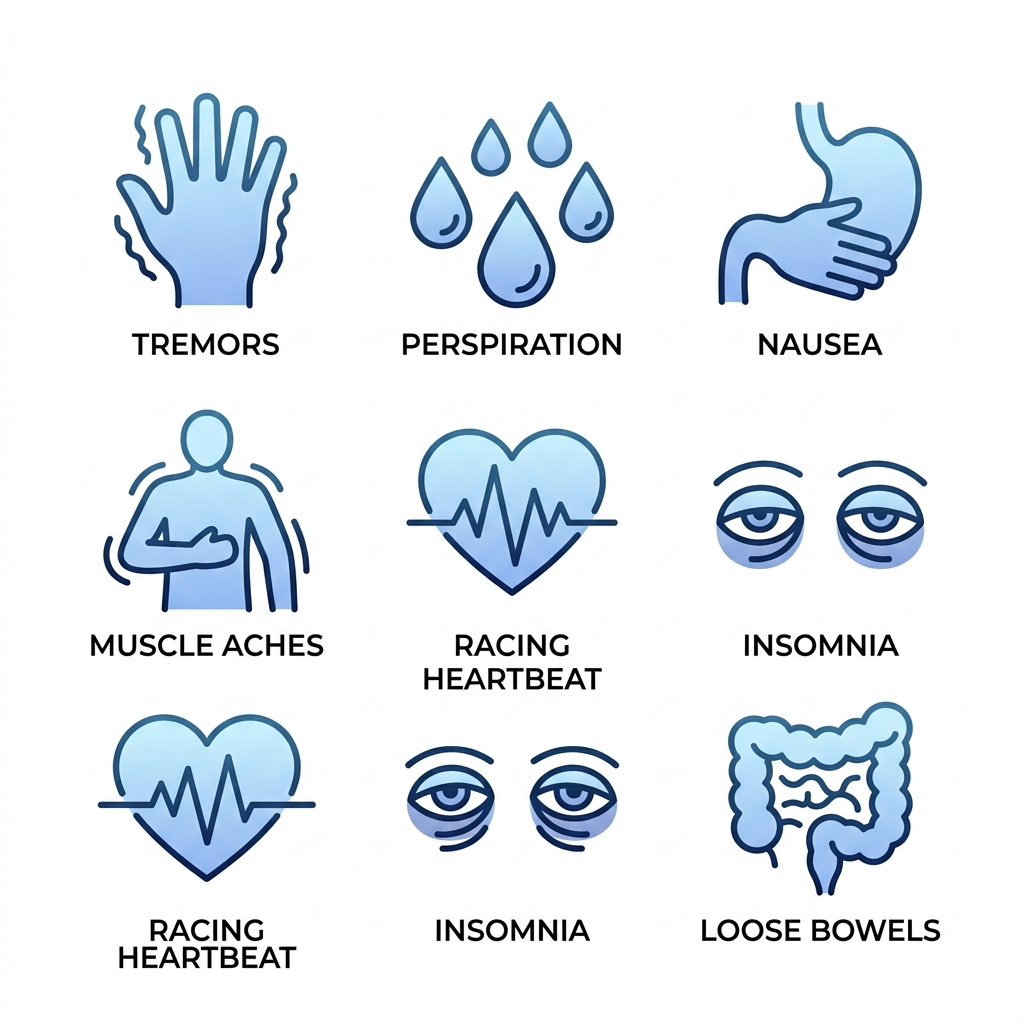
Icons depicting common physical withdrawal symptoms in addiction recovery
If you notice these withdrawal symptoms, our team at Recovery Cove PA in Easton, Pennsylvania, helps manage them safely through evidence-based IOP or MAT. Heal. Grow. Connect. Live.
Signs in Adults Teens and Specific Substances
Recognizing signs of addiction in adults and teens can be challenging, but we often see increased secrecy or isolation as early indicators. At Recovery Cove in Easton, PA, we’ve helped many notice these warning signs of dependency early through our holistic approach.
Common behavioral changes include neglecting work or school duties, spending excessive time obtaining, using, or recovering from substances, failed attempts to control use, and continuing despite problems. The National Institute on Alcohol Abuse and Alcoholism (NIAAA) outlines evidence-based criteria like drinking larger amounts over time or unsuccessful efforts to cut down as key indicators of alcohol use disorder.
Withdrawal symptoms may involve shakiness, sweating, nausea, or anxiety when stopping, per Substance Abuse and Mental Health Services Administration (SAMHSA) guidance on alcohol effects. Teens show sudden grade drops, family withdrawal, or mood swings, while adults face job loss.
If these resonate, contact us at Recovery Cove. Information here is not a substitute for professional medical advice; consult a healthcare professional. Explore our outpatient services next. You are not alone.
Troubleshooting Misinterpretations
It’s common to worry, “But what if I’m wrong about these signs of addiction?” Everyday stress often gets misread as withdrawal symptoms, like fatigue mistaken for cravings or irritability from a long day confused with triggers. Recovery Cove PA offers practical, experience-based recovery strategies to differentiate these, helping you build self-awareness through our holistic approach.
Withdrawal symptoms from normal stress can mimic each other, but key differences emerge with context. For instance:
- Persistent physical unease versus temporary tiredness after poor sleep.
- Intense cravings tied to specific triggers, not just hunger or low energy.
Our evidence-based tools, like mindfulness from trigger management, clarify this without alarm.
Behavioral changes during recovery might seem like relapse risks, but temporary mood swings from social fatigue differ from isolation signaling deeper issues. As expert Q&A guidance from Recovery Cove PA explains in our FAQ on mental health treatment, overlapping symptoms in addiction require nuanced views. Individual Therapy helps unpack these behavioral changes safely.
Signs of addiction are often misinterpreted too, like habit shifts mistaken for full dependency. Use our comprehensive Recovery Cove support hub for self-assessment tools to track patterns accurately. Stress Management sessions address indicators of withdrawal alongside daily fluctuations.
You are not alone and this is not the end of your story. We believe in treating the whole person at Recovery Cove. Heal. Grow. Connect. Live. Consult our professionals in Easton, Pennsylvania, for personalized guidance. Results may vary. Information on this site is not a substitute for professional medical advice. Once identified correctly, here’s how we support you at Recovery Cove.
Taking Action on Addiction Signs
Now that you’ve identified potential signs of addiction like behavioral changes or withdrawal symptoms, we at Recovery Cove PA are here to help. You are not alone and this is not the end of your story. If you’ve noticed social withdrawal, neglecting responsibilities, secrecy about substance use, or mood swings, along with anxiety, sweating, cravings, or tremors, it’s time to act.
Take these steps: 1) Self-assess honestly; 2) Reach out to us via phone at 484-549-2683 or email for free insurance verification; 3) Start with our Outpatient Services or IOP for flexible scheduling. Recovery Cove PA, as our specialized local treatment center offering holistic outpatient services in Easton, provides evidence-based care. We believe in treating the whole person with a holistic approach. Check our comprehensive resource library for additional support tools. Heal. Grow. Connect. Live. Our programs like IOP and PHP provide the next step.
Results may vary. Consult a healthcare professional for diagnosis and treatment recommendations. Information on this site is not a substitute for professional medical advice.
This article was researched and written with the assistance of AI tools.
Resources
- Discover Recovery Cove’s Outpatient IOP Addiction Programs
- Access Recovery Cove’s 24/7 Helpline for Addiction Treatment
- Learn Strategies to Manage Substance Use Triggers Effectively
- Uncover Hidden Dangers of Marijuana Dependence and Treatment
- Explore In-Network Addiction Recovery Resources at Recovery Cove
- Understand Gray Area Drinking Risks and Reduction Strategies
- Find Comprehensive Opioid Addiction Treatment in Lehigh Valley
- Explore CDC Treatments for Opioid Use Disorder Recovery
- Access SAMHSA Resources for Alcohol Use Prevention
- Identify Key Symptoms of Alcohol Use Disorder AUD
- Understand Causes and Treatments for Alcohol Use Disorder