Table of Contents
- Recognizing the Signs of Dual Diagnosis in Adults
- Understanding Dual Diagnosis: The Connection Between Mental Health and Addiction
- How Addiction and Mental Health Symptoms Interact in Dual Diagnosis
- When Signs of Dual Diagnosis Point to a Need for Treatment
- How Medical Professionals Screen for Dual Diagnosis in Adults
- Answers to Common Questions About Dual Diagnosis Signs
- Healing and Recovery Are Possible with the Right Support
Recognizing the Signs of Dual Diagnosis in Adults
Identifying the signs of dual diagnosis in adults—when a mental health condition and substance use disorder coexist—can be difficult because symptoms often overlap. At Recovery Cove, we believe that understanding these warning signs is the first step toward healing.
Common co-occurring disorder symptoms include sudden mood swings, irritability, and anxiety or depression that worsens over time. Daily functioning often declines—responsibilities at work or home get neglected, personal hygiene suffers, and once-loved hobbies lose their appeal. These behavioral warning signs tend to escalate when both conditions fuel each other.
Other warning signs of dual diagnosis include unexplained weight changes, persistent fatigue, bloodshot eyes, or physical withdrawal symptoms like shaking and sweating. Many people also begin to withdraw from loved ones, isolating themselves as shame and confusion deepen. While these signs are not definitive, they suggest it’s time to reach out for professional support.
If these signs sound familiar, we invite you to reach out to our Easton mental health clinic for a confidential assessment. We offer confidential intake, personalized treatment planning, family-involved support, and continuity of care to guide recovery every step of the way forward. Our compassionate team uses a holistic, evidence-based approach to help you Heal. Grow. Connect. Live.
Understanding Dual Diagnosis: The Connection Between Mental Health and Addiction
Dual diagnosis refers to the simultaneous presence of a mental health condition and a substance use disorder. More people experience this than you might expect, and recognizing the signs of dual diagnosis in adults can be the first step toward finding the right support. Conditions like depression, anxiety, PTSD, or bipolar disorder often co-occur with addiction, creating a cycle that can feel overwhelming. These co-occurring disorders can affect anyone, and understanding the patterns is key to recovery.
When someone struggles with persistent depression or anxiety, they may turn to alcohol or drugs to temporarily ease their distress. What begins as a way to cope can eventually develop into a substance use disorder, and the original mental health condition often becomes more severe. In fact, many individuals notice that co-occurring disorder symptoms fluctuate depending on their substance use patterns. Conversely, substance use can change the brain over time, leading to new or intensified mental health issues. For example, chronic alcohol use can deepen depressive episodes, while stimulants can trigger severe anxiety or paranoia. Understanding these warning signs of dual diagnosis — such as using substances to numb emotional pain or experiencing worsening mental health during periods of heavy use — is crucial for early intervention.
Certain conditions frequently appear together. Depression and alcohol use disorder often go hand in hand, as individuals drink to lift their mood only to find themselves more depressed. Anxiety disorders, including panic attacks and generalized anxiety, commonly co-occur with benzodiazepine or alcohol misuse. People with PTSD may turn to opioids or stimulants to manage trauma-related hyperarousal or numbness, creating a dangerous cycle. Bipolar disorder is also linked with substance use during manic or depressive phases, as individuals may use drugs to enhance euphoria or soothe intense lows. These patterns are indicators of co-occurring disorders that require professional assessment.
Because these conditions are deeply intertwined, effective care cannot focus on one problem alone. We believe in treating the whole person, not just the symptoms. A comprehensive dual diagnosis screening is essential to identify both mental health and substance use concerns, and at Recovery Cove, our team provides walk-in assessments that combine clinical questionnaires with compassionate interviews. Remember, you are not alone and this is not the end of your story. Heal. Grow. Connect. Live.
How Addiction and Mental Health Symptoms Interact in Dual Diagnosis
Now, let’s explore how addiction and mental health symptoms interact in a dual diagnosis. According to the Substance Abuse and Mental Health Services Administration (SAMHSA), about 9 million U.S. adults live with co-occurring mental health and substance use disorders. Recognizing the signs of dual diagnosis in adults is a powerful first step for anyone in the Lehigh Valley and Easton, PA, who may be struggling. When you understand how depression, anxiety, and substance use reinforce one another, you can start to see a path forward — one where you can Heal. Grow. Connect. Live.
How Depression and Substance Use Feed Into One Another
Depression often fuels a recurring cycle with substance use, sometimes called the self-medication hypothesis. When someone experiences persistent sadness, fatigue, or hopelessness, they may turn to alcohol or drugs to temporarily escape those emotions. However, during withdrawal, depressive symptoms typically intensify, leaving the person even more distressed and prompting increased substance use. For instance, someone might drink heavily to quiet feelings of emptiness, only to wake up with heightened guilt and lethargy, driving another drink. We see this pattern regularly at Recovery Cove, and we understand how draining it can feel. Recognizing these co-occurring disorder symptoms helps families see that what they’re experiencing is not a personal failing but a treatable condition. With integrated care, it is possible to break this cycle and find relief. We believe in treating both depression and addiction together for lasting recovery. This understanding is key to starting the healing process.
The Role of Anxiety in Driving Substance Use Behaviors
Untreated anxiety—whether it’s panic, social, or generalized—often becomes a powerful driver of substance use. When someone faces constant worry or physical symptoms like a pounding heart, they may reach for alcohol or other substances to calm themselves. While this may offer temporary relief, it increases the risk of developing a substance use disorder. For example, a person with severe social anxiety might start drinking before gatherings, eventually feeling unable to attend without alcohol. At Recovery Cove, we’ve seen how anxiety can lead to repeated substance use as a coping mechanism. SAMHSA data shows that many adults with anxiety disorders also meet criteria for a substance use disorder. We believe in treating the whole person, addressing anxiety and addiction simultaneously so individuals can learn healthier ways to manage fear and build a stable recovery. By understanding the link between anxiety and substance misuse, you can begin to break the cycle.
Recognizing Behavioral and Emotional Warning Signs
For many, noticing the warning signs of dual diagnosis is the first step toward help. Behavioral signs include social withdrawal, sudden changes in routine, neglect of responsibilities, and increased secrecy. Emotional signs may involve rapid mood swings, persistent irritability, or loss of interest in activities once enjoyed. Physical clues can include unexplained weight changes, poor hygiene, a fatigued appearance, or disrupted sleep and appetite. While these signs alone don’t confirm a dual diagnosis, they are meaningful patterns that deserve attention. At Recovery Cove, a comprehensive mental health evaluation is part of every dual diagnosis screening, helping uncover hidden interactions. If you recognize these warning signs in yourself or a loved one, know that you are not alone and this is not the end of your story. Understanding these signs is the first step; the next is a proper screening. A professional dual diagnosis screening can help clarify these signs and guide you toward effective support.
When Signs of Dual Diagnosis Point to a Need for Treatment
Now that you understand what dual diagnosis means, let’s look at the signs that suggest it’s time to seek professional support. Recognizing the signs of dual diagnosis in adults is crucial, because mental health and substance use disorders often fuel each other, creating a cycle that’s difficult to break alone. When symptoms begin to interfere with daily life, work, or relationships, it may be more than a rough patch. At Recovery Cove, we see many people who describe feeling out of control or disconnected from the life they want. You are not alone and this is not the end of your story.
Many people wait until they’re in crisis before reaching out, but knowing the warning signs of dual diagnosis can help you act sooner. The table below highlights common co-occurring disorder symptoms across four key areas, along with guidance on when professional help is a wise next step.
| Category of Signs | Common Indicators | When Professional Help Is Needed |
|---|---|---|
| Mood-Related Signs | Persistent sadness, hopelessness, irritability, mood swings, loss of interest in activities | Symptoms last more than two weeks or interfere with daily responsibilities |
| Behavioral Changes | Social withdrawal, secrecy about activities, prioritizing substance use over relationships | Loved ones express concern or you notice a decline in work or school performance |
| Physical Symptoms | Sleep disturbances, significant weight changes, increased substance tolerance, withdrawal symptoms | Physical health is declining or you experience withdrawal symptoms when not using |
| Cognitive Signs | Memory issues, poor concentration, difficulty making decisions, racing thoughts | Cognitive changes affect your ability to work, manage finances, or maintain relationships |
Experiencing multiple symptoms across categories — for instance, feeling hopeless while withdrawing socially and struggling to concentrate — often signals a deeper, co-occurring condition. When several warning signs of dual diagnosis appear together, a comprehensive assessment can help clarify what’s really going on and open the door to effective, whole-person care. We believe in treating the whole person, not just a set of symptoms.
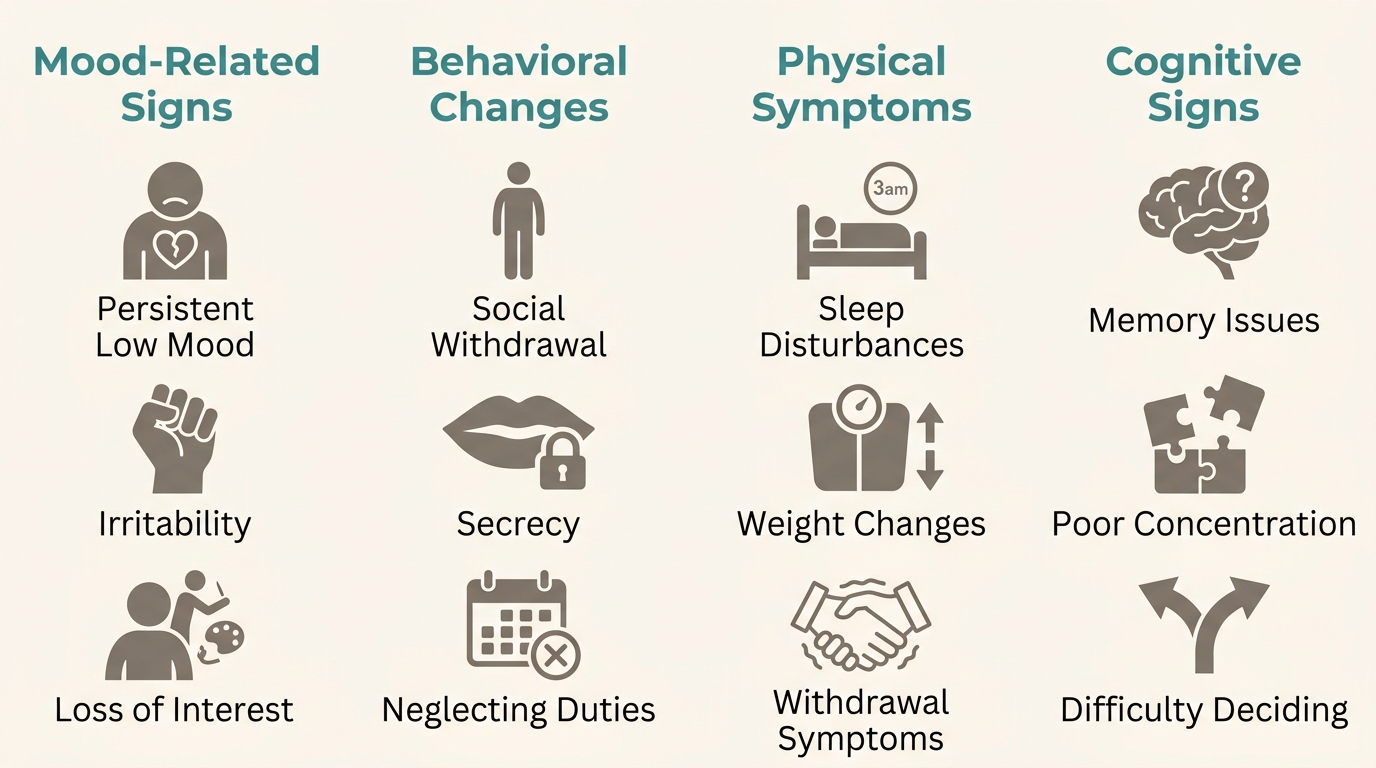
Four-panel infographic of dual diagnosis warning signs in teal and gray
Physical and Behavioral Red Flags That Signal Escalation
Dual diagnosis often shows up in the body before the mind fully acknowledges the problem. Physical symptoms like sleep disturbances, unexplained weight changes, or a growing tolerance to substances can be early warning signs of dual diagnosis. You might notice you need more of a substance to feel the same effect, or that you feel physically ill when you try to cut back. These changes aren’t personal failures — they’re signals that your body is struggling under the weight of co-occurring conditions.
Behavioral changes can be equally telling. Perhaps you’ve started avoiding friends or family, or you’ve become secretive about how you spend your time. When substance use begins to replace hobbies or relationships, and work or school performance drops, it’s often a co-occurring disorder symptom rather than a simple lack of motivation. Loved ones may express concern before you’re ready to see the patterns yourself, and that feedback, while difficult to hear, can be an important step toward healing.
Emotional signs like persistent irritability, deep sadness, or rapid mood swings that last beyond two weeks deserve attention, too. At Recovery Cove, we approach these red flags with compassion, recognizing that behind every symptom is a person trying to cope. Our holistic approach integrates clinical expertise with genuine support, helping you understand that reaching out isn’t a weakness — it’s a courageous return to your own life. Heal. Grow. Connect. Live.
What Happens During a Professional Assessment
Walking through the door for a professional screening might feel intimidating, but knowing what to expect can ease the uncertainty. At our Easton, PA clinic, we offer walk-in assessments that typically last between 60 and 90 minutes and require no prior appointment. During this time, a clinician will talk with you about your substance use history, mental health symptoms, and life circumstances, using evidence-based tools to evaluate the full picture. There’s no judgment here — just a shared commitment to finding the right path forward.
A comprehensive screening looks at how substance use and mental health symptoms interact, rather than treating them as separate issues. Your clinician may also recommend supplemental support through substance abuse mental health services such as SAMHSA, or connect you with additional resources that align with your needs. Because we believe in treating the whole person, the assessment process also considers your physical health, relationships, and personal goals, ensuring that any next steps feel manageable and right for you.
Early intervention consistently leads to better outcomes, so we encourage anyone on the fence to reach out sooner rather than later. According to our own guide on locating co-occurring disorder screening services in Pennsylvania, many people feel a sense of relief simply by starting the conversation. Information on this site is not a substitute for professional medical advice, and results may vary. Consult a healthcare professional for diagnosis and treatment recommendations.
You Are Not Alone: Reaching Out for Support
Asking for help takes immense strength, and you don’t have to navigate this journey by yourself. A strong support system — whether family, friends, peers, or a trusted treatment team — can make all the difference when the signs of dual diagnosis in adults feel overwhelming. At Recovery Cove, we’ve witnessed how connection transforms isolation into hope. Our team in Easton, PA provides dual-diagnosis treatment designed to meet you exactly where you are, with flexible outpatient options that allow you to continue working or going to school while you heal.
Recovery Cove creates a safe space where you can be honest about what you’re experiencing without fear of stigma. We integrate evidence-based therapies with holistic practices to address the root causes of distress, not just the surface symptoms. Our walk-in assessments make it easy to take that first step, and our intake team generally responds within 24 hours to initial inquiries. Heal. Grow. Connect. Live. — this isn’t just a tagline; it’s what we believe is possible for every person who walks through our doors.
Recognizing these signs is the first courageous step. In the next section, we’ll explore the treatment programs available at Recovery Cove to help you heal and thrive. Services and outcomes are provided “as is” and not guaranteed.
You are not alone and this is not the end of your story.
How Medical Professionals Screen for Dual Diagnosis in Adults
If you or someone you care about is experiencing signs of dual diagnosis in adults — confusing mood swings, heightened anxiety alongside drug use, or withdrawal from loved ones — you are not alone. At Recovery Cove, we start by treating the whole person. Screening helps identify when mental health conditions and substance use disorders overlap, and recognizing common signs early opens the door to integrated care.
During a comprehensive clinical interview, we explore mental health history, substance use patterns, family background, and personal stressors. We look for co-occurring disorder symptoms such as persistent depression that intensifies cravings, or trauma responses that fuel alcohol use. Validated screening instruments like the PRISM (Psychiatric Research Interview for Substance and Mental Disorders) or the MINI (Mini International Neuropsychiatric Interview) help flag possible issues; these are tools for identification, not diagnostic tests. The evaluation also examines specific warning signs of dual diagnosis: increased tolerance, withdrawal, relationship problems, and previous failed treatment attempts. By assessing the full picture, we determine whether a deeper evaluation is needed.
This screening is not a substitute for professional medical advice or diagnosis. A positive screen simply indicates that a full diagnostic assessment by a licensed clinician is warranted. At Recovery Cove, we integrate dual-diagnosis screening into our intake process. Walk-in assessments at our Easton, Pennsylvania location typically last 60 to 90 minutes and cover both mental health and substance use in a supportive setting. After screening, results guide next steps—often connecting you with our dual-diagnosis program, where we treat co-occurring conditions together using a holistic approach.
If you’re seeking screening services in Pennsylvania, our team can help you navigate the process and verify your insurance benefits and answer any questions you have.
Answers to Common Questions About Dual Diagnosis Signs
Now that we understand what dual diagnosis is, let’s explore the signs that may indicate a co-occurring disorder. Recognizing the signs of dual diagnosis in adults can help you understand when to seek support. You are not alone.
What Are the Early Signs of a Dual Diagnosis in Adults?
Early co-occurring disorder symptoms often include mood swings, increased substance tolerance, withdrawal from social circles, and changes in sleep or appetite. These signs of dual diagnosis in adults are not definitive, but they may signal the need for a professional evaluation. At Recovery Cove in Easton, we see these overlapping struggles often.
How Can You Tell the Difference Between Addiction and Depression?
Overlapping symptoms like sleep disturbances and loss of interest can make it hard to tell. However, substance cravings and continued use despite consequences typically point to addiction, while persistent sadness and hopelessness are more tied to depression. Only a professional assessment can truly differentiate.
What Symptoms Mean It Is Time for Co-Occurring Disorder Treatment?
Warning signs of dual diagnosis include inability to function daily, repeated failed attempts to stop using, worsening mental health despite coping, and increased risk-taking. If you experience suicidal thoughts, call 988 immediately. This is not a substitute for professional medical advice; consult a healthcare professional for diagnosis and treatment recommendations.
Can Untreated Anxiety Really Lead to Substance Use?
Yes, anxiety can lead to substance use as a temporary relief, but this self-medication cycle can escalate to dependence and worsen both conditions. Our holistic approach integrates evidence-based therapies to address the whole person, breaking this cycle. Heal. Grow. Connect. Live.
Recognizing these signs is the first step. If they resonate with you, learning about treatment options can help you move forward.
Healing and Recovery Are Possible with the Right Support
Recognizing the signs of dual diagnosis in adults is the first step—and healing is within reach. According to SAMHSA, recovery is a process of change where individuals improve health and live self-directed lives. Recovery from co-occurring disorder symptoms is attainable when mental health and substance use issues are treated together with integrated care. Setbacks are part of the journey, not failure. Once you recognize those warning signs, finding the right support is essential. We believe in treating the whole person and walking alongside you. At Recovery Cove, we offer integrated outpatient programs tailored to dual diagnosis. Heal. Grow. Connect. Live.