Table of Contents
- Finding Happiness Without Antidepressants: A Whole-Person Approach
- Understanding Mental Health Beyond Medication
- The Benefits of a Medication-Free Mental Health Strategy
- How Holistic Outpatient Programs Deliver Lasting Well-Being
- Best Practices for Sustaining Mental Health Without Antidepressants
- Embarking on Your Wellness Journey with Confidence
Finding Happiness Without Antidepressants: A Whole-Person Approach
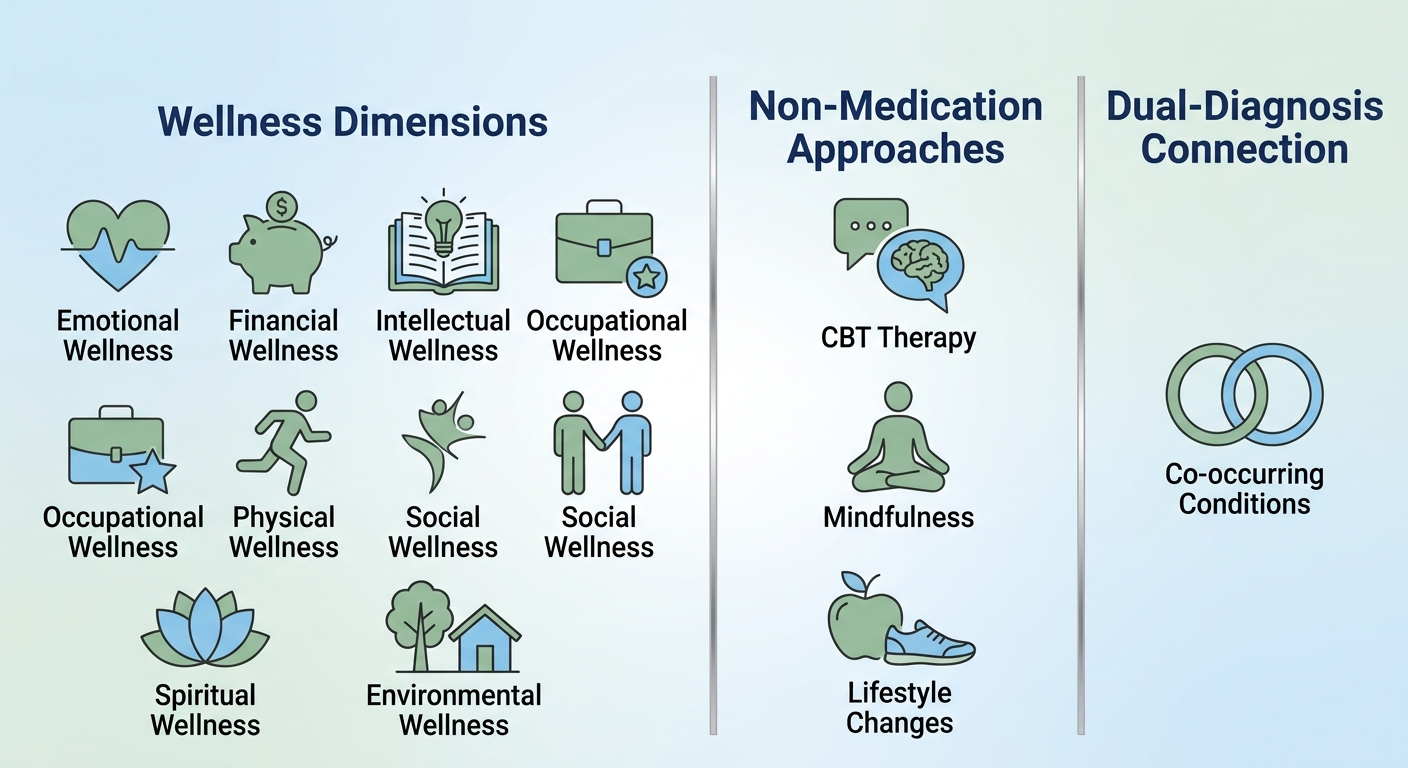
Recovery Cove has you in mind if you’ve ever asked yourself can I be happy without antidepressants? Yes. Happiness is possible using a whole-person wellness approach. Recovery Cove focuses on your total self as opposed to just treating the symptoms. Recovery Cove works to help clients learn about and grow all eight dimensions of their wellness that SAMSHA identifies as essential components of health. The eight dimensions are emotional, social, physical, spiritual, intellectual, occupational, financial, and environmental.
It isn’t just a matter of giving a pill for mental health issues. Rather, it is a process of creating a way of living in which individuals can be comfortable in all aspects of their lives. The handbook produced by SAMHSA divides well-being into eight interrelated parts and provides tips to assist us in how we think. We will formulate personalized treatment plans that might entail working with a therapist, receiving peer assistance, modifying behavior patterns, obtaining psychiatric medication management or medication assisted therapy if required, among other things. By addressing the full picture of your well-being, we help you develop skills, coping strategies, and a sense of purpose that fosters lasting contentment. The outpatient method enables individuals to remain employed, attending school, and maintaining familial connections. Heal. Grow. Connect. Live.
Key Takeaways
- Often depression isn’t just due to some biochemical imbalance.
- While antidepressant medications can provide relief for many, we understand that some individuals are searching for happiness that doesn’t rely on a prescription.
- Many people wonder whether they can find lasting happiness without antidepressant medications.
- If you are wondering whether you can be happy without antidepressants, know that building a fulfilling, emotionally resilient life is achievable through consistent, whole-person strategies.
- While sustaining mental health without medication requires consistent effort and the right support, the next step is believing in your ability to build a fulfilling life.
Understanding Mental Health Beyond Medication
The Nature of Depression and Happiness
Often depression isn’t just due to some biochemical imbalance. It’s more likely there has been a breakdown somewhere across all facets of life. A federal agency, for example, discusses eight dimensions of wellness – emotional, physical, social, intellectual, spiritual, occupational, financial, and environmental. depression treatment approaches which rely primarily on medication do not pay sufficient attention to the interconnection of various aspects of life. We have found that people experience positive change here in the Lehigh Valley as they begin to put back some order to their lives in multiple ways. Happiness is not something that medications can turn “on” for us. Rather, happiness results from looking at ourselves in a holistic way and attending to our well-being in all parts of our lives. To understand depression, we must look at the bigger picture.
Non-Medication Alternatives That Work
Many people ask why they can’t be happy without antidepressants. The answer often lies in the wellness dimensions that medication does not directly address. Cognitive behavioral therapy (CBT), for instance, helps you identify and reframe negative thought patterns that feed depression. Mindfulness practices, including meditation and deep breathing, teach you to respond to stressful emotions with less reactivity. Regular physical activity, even a daily walk, boosts mood-enhancing neurotransmitters and restores a sense of agency. Research shows that combining therapy with lifestyle changes can be as effective as medication for mild to moderate depression. These strategies support emotional, physical, and intellectual dimensions simultaneously and, when used with professional guidance, can reduce symptoms and improve daily functioning.
The Connection Between Dual-Diagnosis and Emotional Health
Co-occurring mental health and substance use disorders—often called a dual diagnosis—can make emotional well-being feel out of reach. Untreated, each condition worsens the other, trapping individuals in a cycle that antidepressants alone rarely break. Dual-diagnosis treatment addresses both simultaneously, building a stable foundation for lasting change. The SAMHSA wellness model reinforces that recovery is a journey across many life areas, and integrated care aligns with that multifaceted approach. You are not alone and this is not the end of your story. By combining evidence-based therapies with attention to all eight dimensions of wellness, we help individuals discover that profound, lasting happiness is possible. This broader understanding of mental health—beyond any single pill—sets the stage for the benefits described elsewhere in our program.
The Benefits of a Medication-Free Mental Health Strategy
While antidepressant medications can provide relief for many, we understand that some individuals are searching for happiness that doesn’t rely on a prescription. We believe in treating the whole person—not just symptoms—and that means exploring medication-free strategies that build lasting emotional well-being. At Recovery Cove, our outpatient programs empower people with the skills and support to pursue stability and joy naturally.
Therapy vs. Antidepressants: A Long-Term Outlook
Medication may help ease your distress and may even lift a deep sadness, but it won’t teach you how to keep yourself well over the long run. In contrast, therapy provides tools and teaches specific skills that remain with you long after your sessions have ended. You might be surprised to know that it has been found through research that certain forms of psychotherapy, such as those based on principles of cognitive behavior therapy (CBT), equip people with techniques for identifying faulty thinking, developing adaptive coping strategies and building inner strength. The beneficial effects of psychiatric medications usually wane when treatment is discontinued; however, many individuals find that the benefits of therapy last much longer if they’ve learned healthy ways of thinking about themselves and their situations. That’s why the “take-away” benefit of being able to function without medication is critical to a medication-free strategy for depression.
How Holistic Therapies Promote Emotional Well-Being
These are holistic therapies that do not target a specific disease but rather a whole person. Yoga, art therapy and mindfulness meditation focus on the mind-body-spirit connection which help us feel relaxed and emotionally balanced. The agency states that wellness involves eight interconnected dimensions, including emotional, physical, and social well-being. These are the eight dimensions SAMHSA lists—social, environmental, physical, emotional, spiritual, occupational, intellectual, and financial—and holistic treatments can support multiple dimensions at once in practical, everyday ways. They assist people to express their feelings, reconnect with their body, and cultivate a sense of purpose. At Recovery Cove, we weave holistic modalities into our outpatient care so that you can experience the benefits of a well-rounded treatment experience without medication.
Lifestyle Changes That Fuel Natural Happiness
Medication-free mental health often starts with simple daily habits that support your brain and body. Regular exercise boosts endorphins, while a nutritious diet provides the building blocks for neurotransmitter production. Quality sleep restores emotional regulation, and nurturing social connections combats loneliness—one of the biggest risk factors for depression. The agency’s wellness guide highlights these lifestyle factors as essential for long-term recovery. When you adopt these changes as part of a structured outpatient program, you build a sustainable routine that can reduce reliance on medication and foster genuine happiness.
How Holistic Outpatient Programs Deliver Lasting Well-Being
Many people wonder whether they can find lasting happiness without antidepressant medications. At Recovery Cove, we believe that a holistic approach to outpatient care can open the door to genuine well-being by addressing the whole person, including mind, body, and spirit, rather than relying solely on medication. Our programs integrate dual-diagnosis treatment, evidence-based therapies, and lifestyle support to help clients build a fulfilling life in recovery.
What Is Dual-Diagnosis Treatment?
At Recovery Cove, our dual-diagnosis treatment focuses on addressing mental health conditions and substance abuse problems simultaneously. This means we don’t treat symptoms like depression and anxiety independently of the patient’s struggle with alcohol and drug misuse, because often they overlap significantly. In fact, according to a federal agency, true wellness reaches across emotional, physical, social, and other dimensions. So does recovery. So, we use this multidimensional view to shape our dual-diagnosis care, helping clients strengthen every area of their lives. For instance, at Recovery Cove you might receive counseling for depression while also learning coping skills to prevent relapse—all within one cohesive plan. When you receive dual diagnosis treatment at Recovery Cove, this means the treatments will focus on multiple areas. That way, there won’t always need to be medication involved when dealing with long-term emotional balance.
Integrating Therapy, Lifestyle, and Support for Whole-Person Care
We combine individual therapy using cognitive behavioral therapy (CBT), group support, and wellness activities to create a truly whole-person care plan. Each client works with a licensed therapist to develop practical strategies for managing thoughts and emotions, while group sessions build a network of peers who understand the recovery journey. Beyond the therapy room, our holistic treatment includes stress management, mindfulness practices, and lifestyle guidance that promote physical and emotional health. Our outpatient programs hold accreditations from the Pennsylvania Department of Drug and Alcohol Programs (PA DDAP), SAMHSA, and The Joint Commission, so you can trust that the care you receive meets rigorous quality standards. This comprehensive blend of therapy, community, and wellness helps people rediscover joy and purpose, showing that achieving well-being without antidepressants is a realistic goal when the whole person is supported.
Outpatient Care That Fits Your Life
Recovery Cove’s outpatient structure is designed to make treatment accessible while you maintain work, school, or family responsibilities. We offer three levels of care: the Partial Hospitalization Program (PHP) runs Monday through Friday from 9:00 AM to 3:00 PM, providing intensive daytime therapy. The Intensive Outpatient Program (IOP) meets each weekday from 9:00 AM to 12:00 PM, striking a balance between structured support and personal time. For those with daytime obligations, our evening outpatient therapy is available Monday through Friday from 5:30 PM to 8:30 PM. This flexibility means you can receive consistent, high-quality care without putting your life on hold. By integrating healing into your daily routine, these programs help you sustain the positive changes that lead to lasting happiness. Sustaining that well-being over the long term, however, requires ongoing practices that build on the foundation of treatment.
Best Practices for Sustaining Mental Health Without Antidepressants
If you are wondering whether you can be happy without antidepressants, know that building a fulfilling, emotionally resilient life is achievable through consistent, whole-person strategies. A key question people ask is whether it is possible to not need antidepressants anymore, and the answer lies in replacing passive recovery with active, evidence-based wellness routines. These practices reinforce the brain’s natural capacity for mood regulation, connection, and purpose.
How to Discuss Tapering Off Antidepressants with Your Provider
A good conversation about reducing drugs occurs prior to any actual tapering down in a dose. The functional goals should be focused on something other than stopping the drug they’re taking, but instead of energy levels, mental clarity, ability to cope without drugs, etc… The questions asked include: what tapering schedule minimizes withdrawal risk, which early warning signs signal a need to pause reduction, and how often follow-up visits should occur. At Recovery Cove we coordinate closely with prescribing physicians through our dual-diagnosis and psychiatric medication management services, ensuring that holistic outpatient support aligns safely with medication adjustments.
Building a Daily Routine for Emotional Resilience
A predictable, layered daily routine creates the psychological safety that protects against emotional dips. A federal agency organizes wellness into eight interconnected dimensions, emotional, physical, social, intellectual, spiritual, occupational, financial, and environmental, and each dimension can be strengthened through small, repeatable actions. A 20-minute outdoor walk addresses physical and environmental wellness simultaneously. Spiritual hygiene does not require formal religion but can involve meditation, nature reflection, or values-based goal work. By anchoring these activities to consistent time blocks, individuals create a stabilizing rhythm that reduces reliance on medication-era patterns.
Leveraging Support Networks and Aftercare for Lasting Success
Relationships in a person’s life are a key component in their ability to have long-term emotional health, particularly when medication is no longer a primary support. The type of relationship will vary from individual to individual but needs to contain elements of accountability, reflection, and a sense of belonging. We encourage individuals to identify at least three reliable contacts across different domains of life. It can be someone who has gone through the recovery process, a family member willing to commit to open communication, or a professional mentor/therapist. Alumni groups such as those found here at Recovery Cove provide structure to our alumni meetings and celebrations, give a forum for discussing successes and failures, and work towards helping our alumni remember how to cope. Family therapy sessions equip loved ones with the language to support rather than rescue, a distinction essential for sustained independence. Engaging in community resources, such as recovery community centers or SAMHSA-affiliated wellness initiatives, extends care far beyond formal discharge, surrounding individuals with the collective wisdom that transforms short-term mood improvement into durable happiness.
Pursuing mental health without medication isn’t a snap decision; it’s a day-to-day practice, based in the safe space of medically informed work, intentional routine, and connection. The eight-dimensional model helps set out that pathway, whilst trusted providers, family members, and peer networks give individuals the support needed to navigate inevitable challenges. Having such self-implementable practices set, individuals are able to move into their subsequent chapter not simply with survival, but truly thriving well-being.
FAQ: Happiness Without Antidepressants
How does therapy compare to antidepressants for long-term emotional well-being?
Therapy provides lasting coping skills for emotional well-being, while antidepressant benefits often fade after discontinuation. Cognitive behavioral therapy teaches techniques to identify faulty thinking and build inner strength, and many individuals find the benefits of therapy last much longer when they’ve learned healthy thinking patterns.
What role does dual-diagnosis treatment play in achieving happiness without medication?
Dual-diagnosis treatment addresses co-occurring mental health and substance use disorders simultaneously, creating a stable foundation for happiness without medication. It aligns with the SAMHSA eight-dimensional wellness model, helping strengthen emotional, social, and physical health together. This integrated approach can reduce the need for antidepressants.
How do I safely discuss tapering off or managing my mental health without antidepressants with a professional?
Discuss tapering by focusing on functional goals like energy levels and coping ability, not just stopping medication. Ask your provider about a tapering schedule that minimizes withdrawal risk, early warning signs to pause reduction, and follow-up frequency. Recovery Cove coordinates with prescribing physicians through psychiatric medication management and dual-diagnosis services to support safe adjustments.
Are there effective non-medication alternatives for managing mental health symptoms?
Yes, effective non-medication alternatives include cognitive behavioral therapy, mindfulness practices like meditation and deep breathing, and regular physical activity. These strategies support emotional, physical, and intellectual wellness dimensions. Research shows that combining therapy with lifestyle changes can be as effective as medication for mild to moderate depression.
Can lifestyle changes and holistic therapies support recovery from depression?
Yes, lifestyle changes and holistic therapies can support depression recovery. Regular exercise, nutritious diet, quality sleep, and social connections boost mood naturally. Holistic therapies like yoga, art therapy, and mindfulness meditation promote emotional balance by addressing the mind-body-spirit connection. Recovery Cove integrates these into outpatient care, helping reduce reliance on medication.
Embarking on Your Wellness Journey with Confidence
While sustaining mental health without medication requires consistent effort and the right support, the next step is believing in your ability to build a fulfilling life. If you’ve been wondering “can I be happy without antidepressants,” know that a wellness-focused approach can help answer that question with optimism.
According to this agency there are eight interconnected dimensions of wellness that affect the quality of our lives. These include Emotional, Financial, Intellectual, Occupational, Environmental, Physical, Social, and Spiritual.
At Recovery Cove, we integrate these dimensions into our accredited outpatient treatment, delivering therapy, medication-assisted treatment, and holistic modalities that address the whole person. Our Joint Commission, SAMHSA, and PA DDAP accreditations reflect our commitment to quality care.
We encourage you to take that first step, focusing on progress rather than perfection. Remember that results may vary, and the information shared here does not replace professional medical advice. Please consult a healthcare professional for personal diagnosis and treatment recommendations. Our services and outcomes are provided as is without guarantees, but our team is dedicated to supporting your journey.
If you want to find out more about how Recovery Cove can support your wellness goals then we encourage you to contact our team for a confidential conversation.
Continue Your Journey to Wellness
Now that you have explored the whole-person approach to happiness without antidepressants, you can take the next step in your wellness journey. The eight dimensions of wellness from SAMHSA provide a foundation for sustainable well-being beyond medication. Recovery Cove offers a wealth of educational resources to deepen your understanding of holistic recovery and mental health. From evidence-based therapies to lifestyle strategies, you will find practical guidance to support your emotional resilience. Explore articles, guides, and support tools designed to help you heal, grow, and connect. Your path to lasting well-being is built on continuous learning and compassionate support. Our resource library offers ways to live a fulfilling, medication-free life.
Continue Your Journey to Wellness





