
Table of Contents
- Process Addiction Treatment: A Comprehensive Guide
- Understanding Process Addictions and the Need for Treatment
- Evidence-Based Therapies for Process Addiction Recovery
- Practical Steps to Overcome Process Addiction
- Holistic and Advanced Treatment Modalities
- Frequently Asked Questions About Process Addiction Treatment
- Taking the Next Step Toward Recovery
Process Addiction Treatment: A Comprehensive Guide
Process addiction treatment addresses compulsive behaviors such as gambling, gaming, shopping, or sex that activate reward pathways without a substance, requiring a structured outpatient approach that progresses through clinically guided stages. At Recovery Cove, we see these behavioral dependencies respond to the same evidence-based therapies that support substance use recovery, because the underlying neurological and emotional patterns are remarkably similar.
Effective treatment follows a step-down continuum that matches intensity to each person’s clinical progress rather than a fixed calendar. The journey typically begins with a stabilization phase lasting one to two weeks, where medical and emotional support create a foundation for deeper therapeutic work. Medication-assisted treatment can be integrated during this early stage when appropriate. From there, individuals transition into our Partial Hospitalization Program or Intensive Outpatient Program depending on their needs, with PHP providing 20 or more hours of weekly therapeutic participation and IOP offering 9 to 15 hours for those maintaining work or family responsibilities.
A defining feature of this model is dual-diagnosis treatment that addresses co-occurring mental health conditions like anxiety, depression, and trauma alongside the behavioral addiction. Standard outpatient care follows with 1 to 2 hours of weekly support, and aftercare planning establishes ongoing relapse prevention through alumni events and peer connections. The stages ahead reveal how each level builds on the last to support lasting change and a return to a fulfilling life where you can heal. grow. connect. live.
Key Takeaways
- Some addictive behaviors, sometimes called process addictions, are addictive because they involve the activation of our reward circuitry in exactly the same way that drugs do, often leading to emotional, social, or physical distress.
- Research-backed approaches have transformed the landscape of behavioral health treatment for compulsive behaviors.
- Recovery from process addiction begins with a structured, step-by-step plan that fits your daily life and personal goals.
- In Easton, PA, treatment for process addictions goes far deeper than changing your mind.
- Once your answers regarding process addiction treatment are clear enough, it’s time to take further action.
Understanding Process Addictions and the Need for Treatment
Some addictive behaviors, sometimes called process addictions, are addictive because they involve the activation of our reward circuitry in exactly the same way that drugs do, often leading to emotional, social, or physical distress. These addictions can wreak havoc on the same dopaminergic pathways as those involved in substance addiction. However, unlike substance use disorders, behavioral addictions rarely require complete abstinence from the triggering activity. For example, the only process addiction usually requiring total cessation of the addictive behavior is pathological gambling.
While process addictions have the same underpinnings on their physiological bases that make them comparable to drug and alcohol addiction, treatment is very different. The chart below outlines differences between these two types of addictions.
| Aspect | Substance Addiction | Process Addiction |
|---|---|---|
| Brain Reward Disruption | Direct chemical stimulation of reward pathways | Dopamine release triggered by compulsive behaviors |
| Abstinence Requirement | Often required, especially for opioids and alcohol | Rarely required, except for pathological gambling |
| Primary Therapy | Varied, including Medication-Assisted Treatment (MAT) and CBT | Cognitive-Behavioral Therapy (CBT) is most common |
| Treatment Goal | Total abstinence or harm reduction | Development of healthy coping mechanisms and moderated behaviors |
| Relapse Rate | 40–60% (national average, 2026) | Comparable relapse patterns, aligning with the chronic disease model |
The contrasts in the table reveal why specialized treatment matters. Because behavioral addictions do not demand total abstinence (except in the case of gambling), individuals learn to develop healthier habits rather than eliminate the activity entirely. Cognitive-Behavioral Therapy (CBT) remains the frontline approach, helping people identify and reframe the distorted thoughts that fuel their compulsive actions. When therapy alone is not enough, pharmacological interventions such as opioid receptor antagonists (like naltrexone) and selective serotonin reuptake inhibitors (SSRIs) can complement the work by managing cravings and underlying anxiety or depression.
Relapse is a normal part of managing any chronic condition, and addiction is no different. Recent data from Recovery Cove in Easton, Pennsylvania, indicates that the national relapse rate for individuals in recovery sits between 40% and 60%, figures that mirror the symptom return rates for other chronic illnesses like diabetes and asthma. We believe that relapse is not a personal failure but a signal that the recovery plan may need adjustment. You are not alone and this is not the end of your story. With the right structure and compassionate support, setbacks become stepping stones toward lasting well-being.
With a clear understanding of process addictions and the importance of treatment, we can examine the evidence-based therapies that form the foundation of effective recovery.
Evidence-Based Therapies for Process Addiction Recovery
Research-backed approaches have transformed the landscape of behavioral health treatment for compulsive behaviors. Cognitive Behavioral Therapy (CBT) stands as the most common and effective evidence-based intervention, while medication-assisted treatment and holistic trauma-informed care provide essential complementary support. The table below compares these key approaches.
| Therapy Type | Core Technique | Best Suited For | Expected Outcomes |
|---|---|---|---|
| Cognitive Behavioral Therapy (CBT) | Cognitive restructuring, reframing | Negative thought patterns (gaming, shopping) | Reduced cravings, healthier coping |
| Medication-Assisted Treatment | Naltrexone, SSRIs | Therapy-resistant, pathological gambling | Reduced urges, mood stability |
| Trauma-Informed & Holistic Care | Trauma processing, mindfulness, yoga, art | Underlying trauma, chronic stress | Emotional healing, regulation |
Cognitive Behavioral Therapy for Process Addictions
Cognitive Behavioral Therapy (CBT) is the most widely researched and effective therapy for process addictions. According to EBSCO’s health research starter, CBT works by identifying the distorted thoughts—such as all-or-nothing thinking—that trigger compulsive behaviors. In our practice, we help clients challenge these patterns and replace them with healthier coping strategies. For process addictions like internet gaming disorder or compulsive shopping, CBT targets the beliefs that justify excessive screen time or spending. Unlike substance use disorders, behavioral addiction treatment rarely demands total abstinence; the exception is pathological gambling, where abstinence-based approaches remain standard. We also incorporate motivational interviewing to strengthen a person’s internal drive for change. Over time, cognitive reframing reduces the intensity and frequency of cravings, empowering clients to make deliberate choices rather than acting on impulse.
Medication-Assisted Treatment for Behavioral Addictions
While therapy forms the core of recovery, medication-assisted treatment (MAT) can offer critical support for certain process addictions. EBSCO notes that opioid receptor antagonists like naltrexone and SSRIs such as fluoxetine have shown promise in reducing urges, particularly for pathological gambling. In our program, medication is never a standalone solution; we combine it with counseling to address the full picture. This approach is often indicated when therapy alone proves insufficient or when co-occurring mental health conditions—like depression or anxiety—contribute to the addictive pattern. We always conduct a thorough psychiatric evaluation to determine if medication is appropriate. For gambling disorder specifically, naltrexone has been studied extensively and can cut the frequency of gambling episodes.
Holistic and Trauma-Informed Care
Holistic and trauma-informed care addresses the deeper emotional and physical dimensions of process addiction. We believe in treating the whole person, not just the behavior on the surface. Many individuals with compulsive behaviors carry unresolved trauma, chronic stress, or emotional dysregulation that fuels their addiction. Trauma-informed therapy—using modalities like EMDR and somatic experiencing—helps clients process past pain without becoming overwhelmed. Alongside traditional therapy, we offer mindfulness practices, yoga, and art therapy to build self-awareness and emotional balance. These approaches teach clients to observe cravings without judgment and respond with intention. Art therapy provides a non-verbal outlet for emotions that are difficult to articulate, fostering insight and release. By combining these holistic tools with evidence-based talk therapy, we create a comprehensive recovery plan that nurtures mind, body, and spirit. This integrative model supports emotional regulation and restores a sense of personal agency.
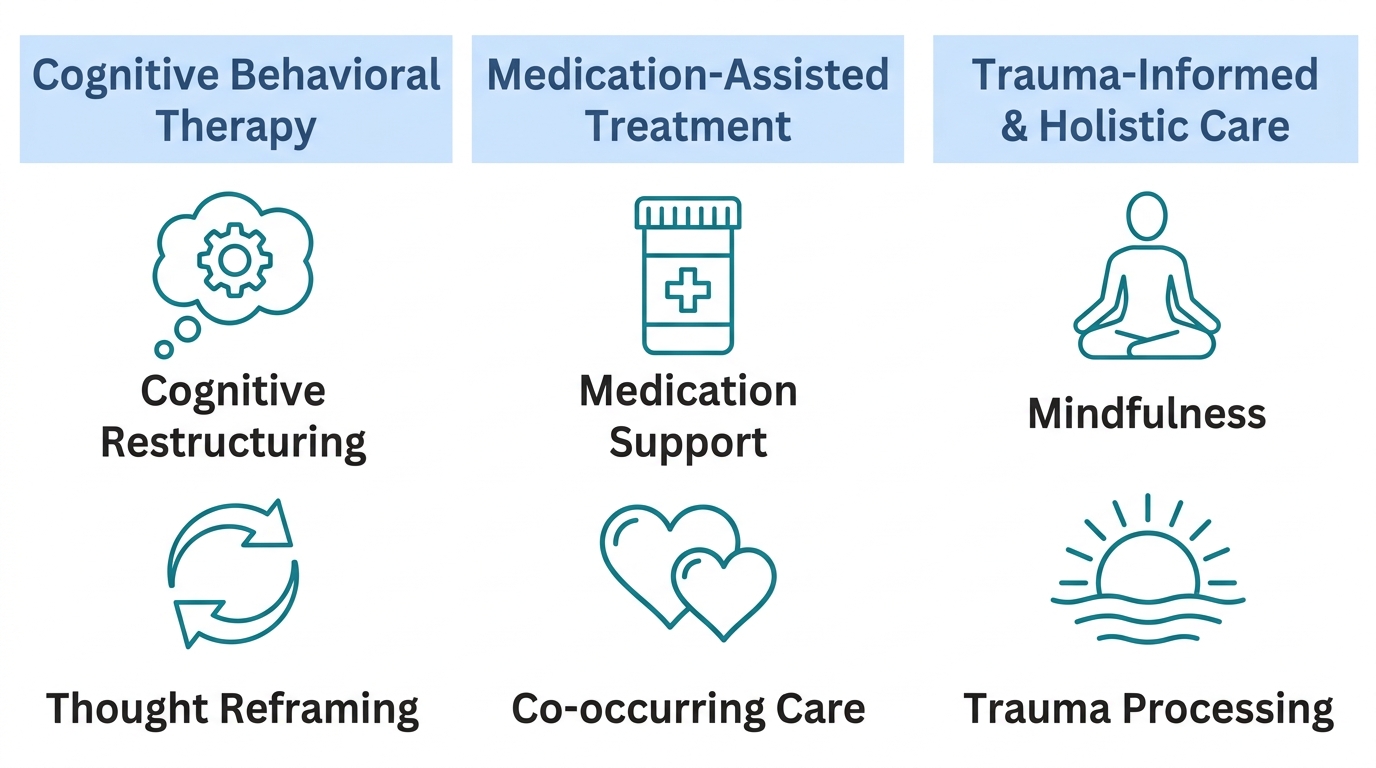
This information about these kinds of treatments will be useful when you start seeking care.
Practical Steps to Overcome Process Addiction
Recovery from process addiction begins with a structured, step-by-step plan that fits your daily life and personal goals. Our outpatient programs offer three distinct levels of care, each providing the right amount of support while allowing you to maintain work, school, or family responsibilities.
| Level of Care | Weekly Hours | Structure | Typical Duration | Best Suited For |
|---|---|---|---|---|
| Partial Hospitalization Program (PHP) | 20–30 | Day sessions 9:00 AM–3:00 PM with therapy, medical oversight, and holistic activities | 4–8 weeks | Individuals needing intensive daily support but not 24/7 supervision |
| Intensive Outpatient Program (IOP) | 10–15 | Morning sessions 9:00 AM–12:00 PM with flexible therapy, medication management, and skill-building | 8–12 weeks | Those balancing treatment with work or family while stepping down from higher care |
| Standard Outpatient (Evening) | 3–6 | Evening sessions 5:30–8:30 PM, ideal for maintaining progress while working full-time | 12+ weeks | Clients with stable recovery who need minimal clinical contact |
Assess Your Needs and Determine the Appropriate Level of Care
Can you commit to a full-day program like PHP, or does an evening schedule better fit your job or family obligations? Do you experience co-occurring anxiety or depression that would benefit from daily medication management? If you need to work during the day, the evening outpatient track (5:30–8:30 PM) may offer the flexibility you need. We recommend writing down your answers and sharing them during a confidential assessment, where our admissions specialists verify your insurance benefits and help you select the level that aligns with your responsibilities and recovery goals.
Build a Personalized Treatment Plan
Once you choose a care level, you collaborate with a clinician to design a plan around your strengths and challenges. Set measurable objectives, such as attending all scheduled sessions, completing a weekly therapy assignment, or reducing exposure to a known trigger. Our programs combine evidence-based therapies like cognitive behavioral therapy and trauma-informed care with holistic modalities—yoga, art therapy, and mindfulness—to address the whole person. When a co-occurring mental health condition is present, we coordinate medication management and, if appropriate, medication-assisted treatment to stabilize your path forward.
Develop Coping Strategies for Triggers and Cravings
Start by identifying your personal triggers—specific people, places, or feelings—and then work with your therapist to create alternative responses. Grounding techniques, brief mindfulness exercises, and a written crisis plan give you immediate tools to use when cravings arise. If you ever need extra support outside of scheduled therapy, Our 24-hour helpline (484-549-2683) is always available; the national Suicide and Crisis Lifeline (988) is another free, confidential resource.
Engage Family and Community Support
We offer family therapy sessions and educational workshops to help loved ones communicate effectively and rebuild trust. Before you transition out of structured care, your team helps you create a detailed aftercare plan that lists local support meetings, counseling options, and personal wellness strategies. To take the first step, call our team at 484-549-2683 for a confidential assessment—our staff will walk you through your options and help you begin a personalized recovery plan. Once these practical steps are in place, exploring holistic and advanced modalities can deepen your recovery journey.
Holistic and Advanced Treatment Modalities
In Easton, PA, treatment for process addictions goes far deeper than changing your mind. We combine evidence-based talk therapies with holistic approaches that heal you as a full being, not merely treating the symptoms.
Cognitive behavioral therapy targets negative thought patterns, such as all-or-nothing thinking, that often drive process addictions. Clients will go through therapy to modify their reactions to unhealthy thoughts and change harmful habits in their lives.
DBT focuses on teaching distress tolerance, emotion regulation and interpersonal skills to help people learn how to handle impulsive urges and overwhelming emotions that may lead them to engage in unwanted or problematic behavior patterns.
The therapy teaches mindfulness as a method for living in the now without any judgment of cravings. With the help of mindful breaths and body scanning exercises, people may lessen their stress and get time to pause prior to reacting impulsively to these emotions.
Trauma-informed therapy starts from the premise that past adverse events often lie at the root of addiction. Through approaches such as EMDR, we assist individuals in healing old injuries and overcoming a destructive way of medicating themselves.
| Modality | Approach | Key Benefits | How It Integrates with Other Treatments |
|---|---|---|---|
| Cognitive Behavioral Therapy (CBT) | Evidence-based talk therapy modifying negative thought patterns | Reduces addiction-triggering thoughts | Integrates with mindfulness and trauma-informed work |
| Dialectical Behavior Therapy (DBT) | Talk therapy building emotional regulation | Improves stress and impulse control | Integrates with CBT and mindfulness |
| Mindfulness Therapy | Holistic mind-body practice | Manages cravings and reduces stress | Integrates with CBT and trauma-informed therapy |
| Trauma-Informed Therapy | Advanced modality addressing underlying trauma | Heals root causes | Integrates with CBT and MI |
We know that relapse rates in cases of substance abuse problems hover around 40% – 60%, similar to how often symptoms resurface as chronic ailments such as diabetes. With a mixture of therapy methods and more holistic treatments, our clients have everything they need at their disposal to avoid future complications and ensure a healthy future ahead.
These advanced approaches spark questions about the most effective combination for each person. Our team welcomes those questions and works closely with you to craft a plan that fits your journey.
Frequently Asked Questions About Process Addiction Treatment
Building on the holistic approaches above, here are answers to questions.
What is process addiction and what are some examples?
Process addiction refers to a constant engagement in an activity such as gambling, playing video games, surfing the web, or shopping despite facing detrimental outcomes for oneself.
How does a process addiction affect the brain?
It triggers your brain’s reward circuitry, producing dopamine and creating habits comparable to drug addiction.
What treatments are effective, and can it be treated alongside substance use?
Effective process addiction care includes cognitive-behavioral therapy (CBT), dialectical behavior therapy (DBT), and support groups. When a substance use disorder is also present, integrated treatment that addresses both conditions at once is typically recommended to support whole-person recovery.
If you’re happy with this answer, then maybe you should start thinking about how we can help you get better.
Taking the Next Step Toward Recovery
Once your answers regarding process addiction treatment are clear enough, it’s time to take further action. We provide flexible services that include: IOP from 9:00 AM – 12:00 PM, PHP from 9:00 AM – 3:00 PM, as well as evening outpatient option at hours between 5:30 PM – 8:30 PM on weekdays only. Please reach out to us through phone call (484)-549-2683 or visit our office located on 2005 Fairview Ave in Easton, PA.
Results may vary; information on this site is not a substitute for professional medical advice; services and outcomes are provided “as is” and not guaranteed. Consult a healthcare professional for diagnosis and treatment recommendations. We’re here to listen and walk with you.
Start Your Recovery Journey Today
Now that you’ve explored the stages of process addiction treatment, from stabilization to aftercare, and the evidence-based therapies that drive recovery, you’re ready to take the next step. We combine medication-assisted treatment, CBT, and holistic care into a whole-person plan that heals mind, body, and spirit. Our flexible outpatient programs—day IOP (9 AM–12 PM), day PHP (9 AM–3 PM), and evening sessions (5:30 PM–8:30 PM)—fit your schedule while providing the support you need. Trauma-informed care, family involvement, and coping skill development are built into every recovery journey. A caring professional is available 24/7 at 484-549-2683 to discuss personalized treatment options without obligation. You are not alone in this journey; a healthier, fulfilling life is within reach.
Start Your Recovery Journey Today





