
Table of Contents
- The Lasting Impact of Childhood Trauma on Substance Use Risk
- The Connection Between Adverse Childhood Experiences and Addiction Risk
- How ACEs Change Brain Development and Fuel Addiction
- Trauma-Informed Care: What It Looks Like for Substance Use Recovery
- Integrated Treatment for Co-Occurring Trauma and Addiction
- Answers to Common Questions About ACEs and Substance Use Recovery
- Healing from Childhood Trauma to Support Lifelong Recovery
The Lasting Impact of Childhood Trauma on Substance Use Risk
Adverse childhood experiences (ACEs) don’t just affect emotional health—they can also lay the groundwork for substance use later in life. The connection between adverse childhood experiences and substance use is something we see often in our work at Recovery Cove.
When a child endures trauma, the brain’s stress response can become overactive, wiring them for heightened anxiety and impulsivity. This biological shift, paired with difficult emotions, may increase the risk of developing a substance use disorder. For many, turning to alcohol or drugs starts as a survival response—a way to quiet pain, not a moral failing.
Unresolved trauma can fuel a cycle: emotional dysregulation → self-medication → escalating use → a substance use disorder. But understanding this link is the first step toward healing. Our team offers compassionate, evidence-based therapies that help people rebuild coping skills and resilience over time. We offer trauma-informed care for substance use disorders that addresses the root cause, not just the symptoms.
Our integrated treatment for co-occurring trauma and addiction helps break the cycle with compassionate, evidence-based support. You are not alone and this is not the end of your story. At Recovery Cove in Easton, PA, we’re here to help you heal.
The Connection Between Adverse Childhood Experiences and Addiction Risk
Childhood should be a time of safety and growth, but for many, it is marked by abuse, neglect, or household dysfunction—experiences now recognized as adverse childhood experiences (ACEs). The Substance Abuse and Mental Health Services Administration (SAMHSA) identifies ten categories of ACEs that profoundly affect lifelong health. Research on adverse childhood experiences and substance use consistently shows that these early traumas increase the risk of developing substance use disorders. At Recovery Cove, we see this risk in our clients’ lives and believe understanding the connection is the first step toward healing.
The link between childhood trauma and addiction risk is grounded in neurobiology. Prolonged stress dysregulates the body’s stress-response system, particularly the hypothalamic-pituitary-adrenal (HPA) axis, leading to an exaggerated fight-or-flight response and difficulty managing emotional distress. The brain’s development is also altered: the prefrontal cortex, responsible for impulse control, may function suboptimally, while the amygdala becomes overactive. According to SAMHSA, these changes create vulnerability to substance use as a way to self-medicate anxiety, depression, or numbness. These neurodevelopmental effects often persist, influencing relationships, decision-making, impulse control, and stress reactivity across the lifespan and complicating recovery efforts without appropriate care. The result is a biologically rooted pathway from early adverse experiences and substance use to addiction.
When these traumas go unaddressed, coping mechanisms can evolve into a substance use disorder. Our clinical experience shows signs like loss of control, intense cravings, and withdrawal—trauma’s role in addiction runs deep. Research on adverse childhood experiences and substance use demonstrates a dose-response relationship: the more ACEs, the higher the addiction risk. That’s why integrated treatment for co-occurring trauma and addiction is essential—it addresses root causes alongside the substance use, promoting lasting recovery.
Recovery requires a whole-person approach that recognizes these roots. Trauma-informed care for substance use disorders provides a framework of safety, trust, and empowerment, helping individuals rebuild lives without judgment. At Recovery Cove, we believe in treating the whole person—addressing not just the addiction but the trauma that fuels it. We walk with you to Heal. Grow. Connect. Live. If you or a loved one is struggling, reach out to our team in Easton, PA, to learn about our holistic, evidence-based treatment. Results may vary, but healing is possible.
How ACEs Change Brain Development and Fuel Addiction
Now, let’s explore how adverse childhood experiences and substance use are connected through tangible changes in the brain’s structure and stress response. The science helps us see why early adversity doesn’t just live in memory—it reshapes biology in ways that can make substances feel like the only escape.
Neurobiological Impact of Childhood Trauma on the Brain
When a child faces repeated trauma, the brain’s fear center—the amygdala—becomes overactive. Think of it as a smoke alarm that never stops ringing, even when there’s no fire. At the same time, the prefrontal cortex, which handles impulse control and decision-making, develops more slowly and struggles to calm the alarm. This imbalance makes it harder to regulate emotions and resist cravings.
These structural changes don’t just make daily life more difficult—they set the stage for substance use. If the brain is constantly scanning for danger, substances that promise temporary relief can feel like a solution. Over time, the brain learns to rely on them to quiet the internal chaos. The link between childhood trauma and brain changes is one reason early adversity increases addiction risk so powerfully.
These shifts in brain architecture also disrupt the body’s stress response system, a connection we’ll examine next.
The Role of Stress Response Systems in Substance Use
The hypothalamic-pituitary-adrenal (HPA) axis is the body’s central stress network. In a healthy system, cortisol spikes to help us cope, then returns to baseline. But chronic childhood stress can keep the HPA axis locked in overdrive—a state of persistent hyperarousal. This dysregulation leads to exhausted, flattened cortisol rhythms that leave a person depleted and emotionally raw.
Here’s where how childhood stress fuels substance use becomes clear: substances like alcohol or opioids can artificially soothe an overactive stress system. When the body can’t produce calm on its own, drugs and alcohol offer one. This self-medication pattern is not about weakness—it’s a biological survival strategy that, over time, entrenches addiction.
Understanding the HPA axis helps us see that addiction often begins as an attempt to restore internal balance. These physiological changes can even leave chemical marks on our genes, a topic we’ll now explore.
Epigenetic Factors and Long-Term Addiction Risk
Adverse childhood experiences can alter gene expression without changing the DNA sequence itself. Through processes like methylation, stress-related genes get chemically tagged, making them more or less active. These epigenetic changes can dysregulate the body’s response to future stress and heighten vulnerability to substance use disorders.
What’s particularly striking is that these tags can be passed to the next generation. Children of parents with high ACE scores may inherit a stress system that’s already primed for dysregulation. Of course, this isn’t destiny—epigenetic marks can be reversed through supportive environments and evidence-based interventions.
That’s why trauma-informed care for substance use disorders matters so much. Integrated treatment for co-occurring trauma and addiction targets these deep-rooted biological patterns. At Recovery Cove, we incorporate evidence-based trauma therapy designed to address the neurobiological impact of ACEs and help clients rebuild healthier stress responses.
The following table shows how the risk climbs as ACE scores rise.
| ACE Score | Odds of Illicit Drug Use | Odds of Alcoholism | Odds of IV Drug Use |
|---|---|---|---|
| 0 | 1.0 (reference) | 1.0 (reference) | 1.0 (reference) |
| 1–3 | 1.5–3x | 2–4x | 2–7x |
| 4+ | 2–4x | 4–7x | 4–11x |
Data sourced from the original ACE Study (Felitti et al., 1998) and CDC reports; odds are relative to individuals with an ACE score of 0. These statistics represent population-level risks; individual experiences vary.
These numbers help illustrate how ACEs increase the risk of developing a substance use disorder. The cumulative nature of the risk is clear—each additional adverse experience stacks the odds. Understanding this biological reality is the first step toward lasting change. In the next section, we’ll discuss how trauma-informed care can help rewire the brain and support recovery that goes deep. Remember, you are not alone and this is not the end of your story. Heal. Grow. Connect. Live.
Results may vary; consult a healthcare professional for personalized advice.
Trauma-Informed Care: What It Looks Like for Substance Use Recovery
Adverse childhood experiences and substance use are closely linked—unresolved trauma often drives addictive behavior. At Recovery Cove, we use trauma-informed care to treat the whole person, not just symptoms. This compassionate approach helps clients heal at the root, opening the door to lasting recovery.
Principles of Trauma-Informed Care
At Recovery Cove, we provide trauma-informed care for substance use disorders based on six principles from SAMHSA substance abuse resources: safety, trustworthiness, peer support, collaboration, empowerment, and cultural sensitivity. Safety means creating a physically and emotionally secure environment, starting with our confidential intake process. Trustworthiness is built through transparent communication and consistent boundaries. Peer support thrives in group therapy, where shared experiences reduce feelings of isolation. Collaboration empowers clients to co-create their treatment plans with our team. Empowerment shifts the focus to strengths and resilience, not deficits. Cultural sensitivity ensures that we honor each client’s unique identity, background, and values. By weaving these principles into every interaction, we help clients feel seen, heard, and respected.
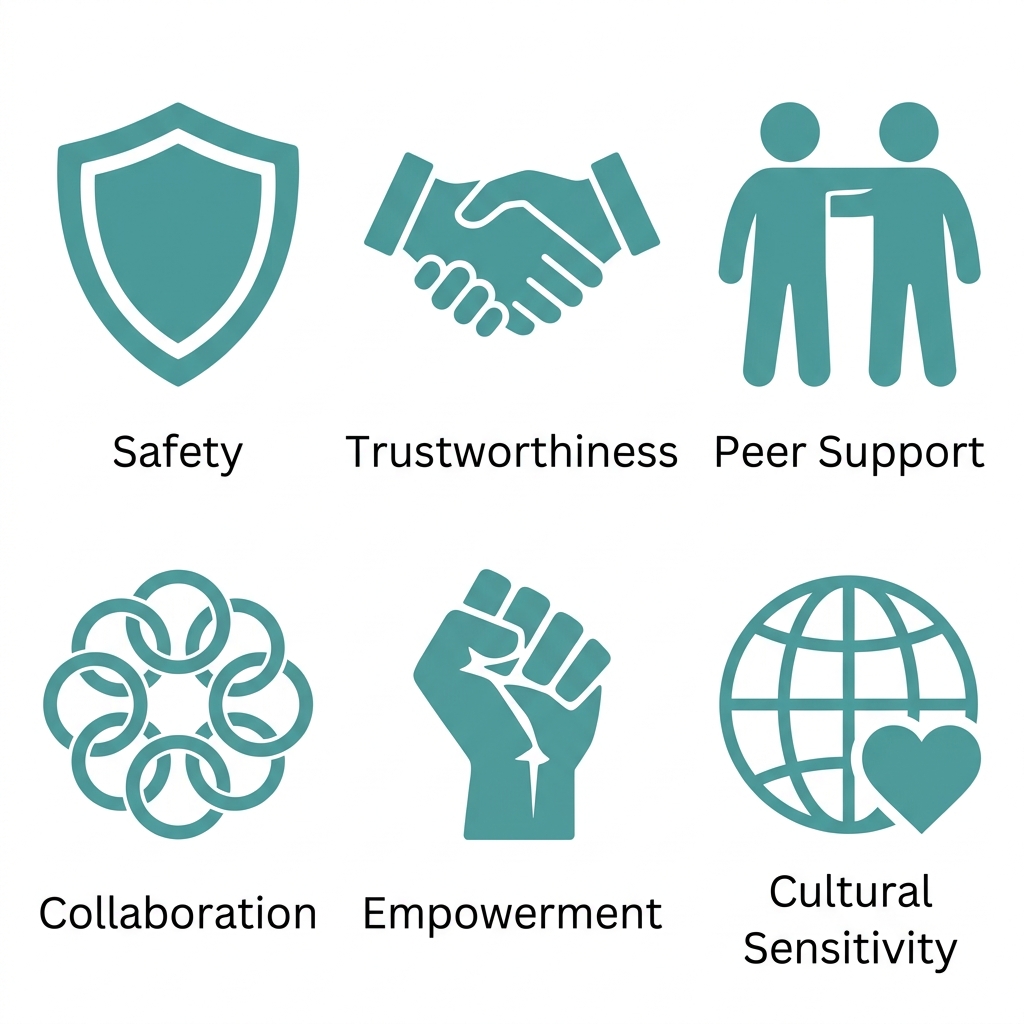
These foundational principles set the stage, but true healing often requires addressing trauma stored in the body.
Somatic Therapies and Mind-Body Healing Modalities
At Recovery Cove, we offer integrated treatment for co-occurring trauma and addiction through somatic therapies like EMDR, yoga, and mindfulness. EMDR (Eye Movement Desensitization and Reprocessing) uses bilateral stimulation to reprocess traumatic memories, reducing their emotional charge and power to trigger substance use. Yoga, practiced in a trauma-sensitive manner, helps clients reconnect with their bodies and regulate stress responses. Mindfulness meditation teaches present-moment awareness, interrupting automatic reactions to cravings and anxiety. These body-based modalities complement talk therapy, giving clients practical tools to manage distress and stay grounded. By healing trauma on a physical level, we support the nervous system’s return to balance, a critical step in sustaining long-term recovery. We believe that treating the whole person means addressing the mind and body together.
Creating Safety in Outpatient Treatment Settings
Physical and emotional safety are the cornerstones of our outpatient programs. Our Easton, PA facility offers a calm, private setting with comfortable spaces designed to put you at ease. We train every staff member in trauma-informed communication so that every interaction is respectful and free of judgment. Confidentiality is paramount, and we always seek consent before discussing sensitive issues. Flexible scheduling helps clients balance treatment with work and family, reducing outside stressors. Emotionally, we cultivate a culture of acceptance—you are not alone, and this is not the end of your story. Our team’s genuine compassion creates a space where vulnerability is met with empathy. When you feel truly safe, you can begin to heal—that’s why safety guides every aspect of our care.
The following comparison shows how trauma-informed care fundamentally shifts the approach, focus, modalities, role of trauma, and expected outcomes.
| Aspect | Traditional Addiction Treatment | Trauma-Informed Care |
|---|---|---|
| Approach | Symptom-focused | Whole-person healing |
| Focus | Reducing substance use | Addressing root trauma |
| Therapeutic Modalities | Standard CBT/12-step | EMDR, yoga, mindfulness, trauma-informed CBT |
| Role of Trauma | Often overlooked | Central focus |
| Recovery Outcomes | Short-term sobriety | Sustainable healing and reduced relapse |
Based on SAMHSA’s Guidance for a Trauma-Informed Approach and clinical practice standards.
With this trauma-informed foundation, let’s explore the specific therapies that support lasting recovery. Heal. Grow. Connect. Live.
Integrated Treatment for Co-Occurring Trauma and Addiction
Understanding the link between adverse childhood experiences and substance use is the starting point for lasting recovery. Integrated treatment means addressing trauma and addiction together in one coordinated plan, rather than treating them in separate or sequential steps. When painful life experiences fuel substance use, healing must happen on every level.
Unresolved trauma is one of the strongest predictors of relapse. Research from the Substance Abuse and Mental Health Services Administration (SAMHSA) shows that adverse childhood experiences significantly raise the risk of developing a substance use disorder later in life. Without treating the root wounds, recovery remains fragile. That is why we deliver integrated treatment for co-occurring trauma and addiction at our Easton, PA outpatient center—so each person can rebuild from the ground up.
We believe in treating the whole person. Our trauma-informed care for substance use disorders blends evidence-based therapies with holistic support. Individual sessions use Cognitive Behavioral Therapy (CBT) to reframe painful patterns, while group therapy and experiential activities such as art and nature experiences restore connection and self-esteem. When clinically appropriate, medication-assisted treatment (MAT) provides additional stabilization. This dual-focused recovery model draws on SAMHSA’s guidance that simultaneous care produces better outcomes than treating one condition at a time.
The whole-person philosophy means attending to mind, body, and spirit. Our team creates a safe, nonjudgmental space where clients learn healthier coping skills and rediscover hope and work toward rebuilding relationships, daily routines, and community connections consistently. You are not alone and this is not the end of your story. Through compassionate, integrated treatment for co-occurring trauma and addiction, we walk with you toward renewed strength. Heal. Grow. Connect. Live.
Results may vary. Individualized treatment plans are developed in consultation with our clinical team.
Answers to Common Questions About ACEs and Substance Use Recovery
At Recovery Cove, we often hear these questions from our clients.
How do ACEs increase relapse risk?
Adverse childhood experiences and substance use are connected because ACEs heighten sensitivity to emotional triggers such as stress, loneliness, or interpersonal conflict. Drawing on our relapse prevention resources, our team helps clients identify personal triggers and develop early awareness plans. Individual experiences and recovery outcomes vary.
What coping skills help prevent relapse?
We teach practical techniques like mindfulness, grounding exercises, and deep breathing as part of our trauma-informed care for substance use disorders and integrated treatment for co-occurring trauma and addiction. These skills address both trauma distress and cravings. Healing is a personal journey, and we believe in treating the whole person.
If you’d like to learn how we address these challenges in treatment, read on. You are not alone. Heal. Grow. Connect. Live.
Healing from Childhood Trauma to Support Lifelong Recovery
Adverse childhood experiences (ACEs)—abuse, neglect, or household dysfunction—are common among those in recovery, and research confirms the connection between adverse childhood experiences and substance use. Unresolved trauma often drives self-medication with alcohol or drugs, creating a cycle of addiction. We use trauma-informed care for substance use disorders to help clients reprocess painful memories with evidence-based therapies like CBT and EMDR, reducing the urge to rely on substances. At Recovery Cove, our integrated treatment for co-occurring trauma and addiction takes a holistic approach that addresses the root cause, supporting lifelong recovery and whole-person wellness.





