Table of Contents
- Understanding Medication-Assisted Treatment for Addiction Recovery
- Fundamentals of Medication-Assisted Treatment
- Exploring MAT Options for Opioid and Substance Use Disorders
- Practical Steps for Accessing and Starting MAT
- Advanced Strategies in Medication-Assisted Treatment
- Frequently Asked Questions About Medication-Assisted Treatment
- Embracing MAT for Lasting Recovery at Recovery Cove
Understanding Medication-Assisted Treatment for Addiction Recovery
At Recovery Cove in Easton, Pennsylvania, we embrace medication assisted treatment as a cornerstone of compassionate, evidence-based care for addiction recovery. This approach combines FDA-approved medications with counseling and behavioral therapies to treat opioid and alcohol use disorders, offering a whole-patient strategy that supports long-term healing. As highlighted by SAMHSA, MAT improves patient survival rates, boosts retention in treatment, and reduces relapse risks, helping individuals regain control over their lives without the burden of stigma.
We integrate MAT seamlessly into our outpatient programs, including the Partial Hospitalization Program (PHP) and Intensive Outpatient Program (IOP), allowing flexibility for those balancing work, school, or family commitments. For opioid recovery, options like buprenorphine treatment and methadone treatment help normalize brain chemistry, ease cravings, and restore daily functions. These substance use disorder treatment options align with national guidelines, ensuring safe, tailored support in our community-focused setting.
The benefits of MAT in outpatient care are profound, providing accessible recovery paths that fit real-life needs. We accept major insurances like Highmark and Aetna, making treatment approachable and reducing financial barriers. This medication-supported therapy empowers clients to return to daily routines while addressing co-occurring mental health issues through dual-diagnosis services.
As you explore recovery at Recovery Cove, know that our 24-hour helpline at 484-549-2683 stands ready for immediate guidance. We invite you to delve deeper into how MAT fosters sustained progress, embodying our commitment to heal, grow, connect, and live. You are not alone and this is not the end of your story.
Fundamentals of Medication-Assisted Treatment
At Recovery Cove, we believe medication assisted treatment forms a cornerstone of effective recovery from substance use disorders, particularly opioid addiction. This approach combines FDA-approved medications with counseling and behavioral therapies to address the whole person, helping individuals manage cravings and rebuild their lives. We integrate medication assisted treatment into our outpatient programs to provide flexible, evidence-based support that aligns with everyday responsibilities.
The three pillars of medication assisted treatment are straightforward yet powerful. First, medications work to normalize brain chemistry, easing withdrawal symptoms and reducing the intense urges that often lead to relapse. Second, counseling offers personalized guidance to uncover underlying triggers and develop coping strategies. Third, behavioral therapies, such as cognitive-behavioral techniques, empower lasting change by addressing thought patterns and behaviors tied to addiction. Together, these elements create a comprehensive safety net, much like scaffolding during construction, ensuring steady progress toward sobriety.
Understanding why a comparison between medication assisted treatment and traditional therapy matters can clarify its unique value. While both aim for recovery, MAT adds a pharmacological layer that tackles physiological aspects head-on, leading to better retention and outcomes as supported by SAMHSA research showing 40-60% improvement in treatment adherence.
| Aspect | MAT Approach | Traditional Therapy Only |
|---|---|---|
| Medications reduce withdrawal and cravings | Lower rates with combined care | N/A |
| Flexibility | Outpatient compatible with daily life | FDA-approved and SAMHSA-endorsed |
This table highlights how MAT enhances outcomes by addressing both body and mind, reducing relapse risks by up to 50% according to clinical studies. At Recovery Cove, we see this integrated approach not only boosts retention but also empowers clients to maintain employment and family connections during treatment.
Historically, medication assisted treatment faced stigma, viewed as mere substitution rather than true recovery. Yet, evolving research has shifted perspectives, with pharmacotherapy for addiction now mainstream and endorsed by organizations like SAMHSA. Common myths persist, such as the idea that medications like buprenorphine simply replace one dependency with another, but evidence shows they restore balance without euphoria, supporting long-term medication-supported recovery. We at Recovery Cove educate our clients on these facts to foster informed, stigma-free healing.
In our outpatient setting, we seamlessly integrate medication assisted treatment into Partial Hospitalization Programs (PHP) and Intensive Outpatient Programs (IOP), allowing flexibility for work or school. This dual-diagnosis compatibility addresses co-occurring mental health issues, incorporating group therapy and holistic elements like stress management. Our team verifies insurance quickly to make care accessible, ensuring buprenorphine treatment for home-based induction or methadone treatment through partnered clinics, all while emphasizing evidence-based practices.
When exploring options online, resources on medication assisted treatment support can help access reliable information about programs like ours. Buprenorphine, often started via telehealth, partially activates opioid receptors to curb cravings without full intoxication, ideal for outpatient use. Methadone, administered in structured clinics, fully stabilizes patients, preventing withdrawal for those with severe dependence. Both, combined with therapy, align with our holistic approach, where we treat the whole person to heal, grow, connect, and live fully in recovery. Results may vary, and we encourage consulting healthcare professionals for personalized advice.
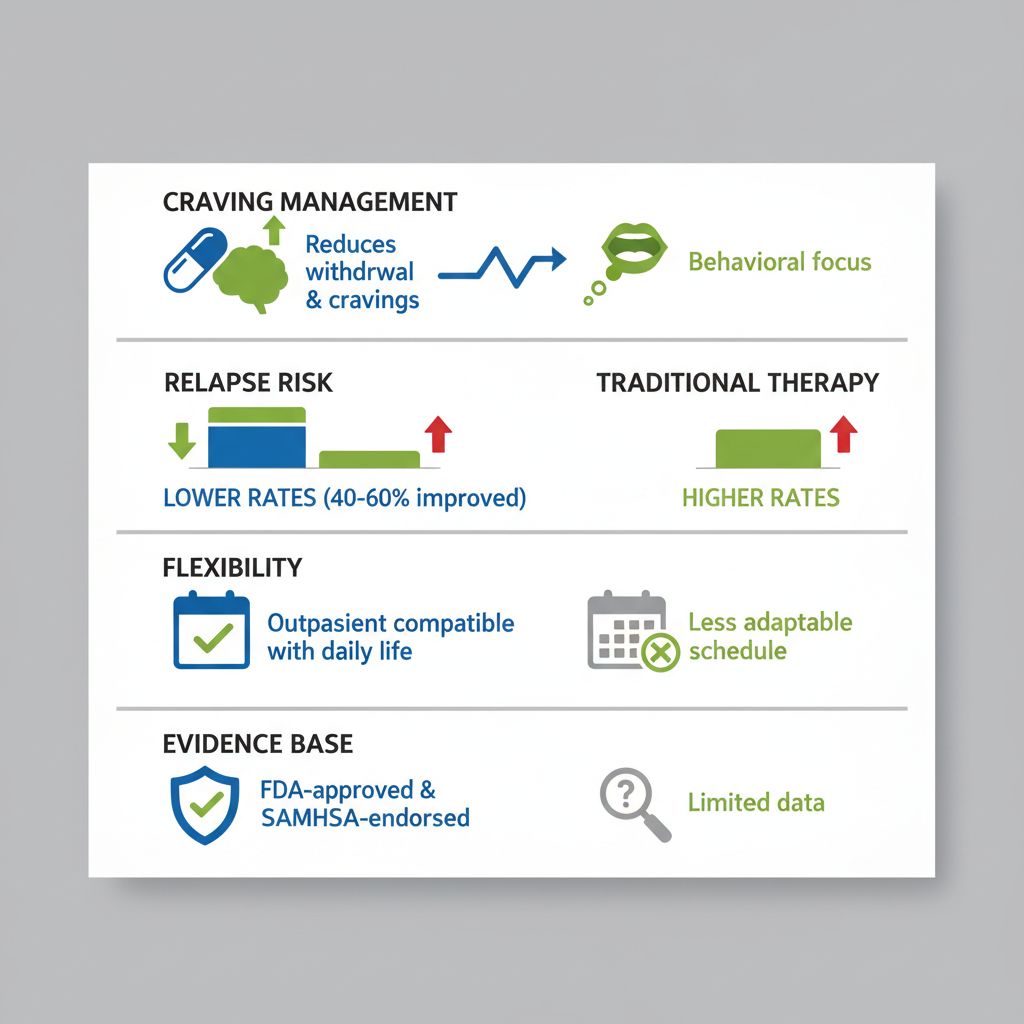
MAT vs. traditional therapy: key benefits and evidence for recovery
Building on these fundamentals, medication assisted treatment at Recovery Cove empowers sustainable change, blending science with compassionate support for lasting recovery.
Exploring MAT Options for Opioid and Substance Use Disorders
At Recovery Cove, we understand that medication assisted treatment plays a vital role in managing opioid and substance use disorders effectively. This approach combines medications with counseling and behavioral therapies to support long-term recovery, addressing both the physical and psychological aspects of addiction. Our outpatient programs in Easton, Pennsylvania, integrate these options seamlessly for clients seeking compassionate, evidence-based care.
Buprenorphine Treatment Details
Buprenorphine serves as a cornerstone of opioid pharmacotherapy, acting as a partial opioid agonist to ease withdrawal symptoms and reduce cravings without producing the intense high associated with full agonists like heroin. By binding to the same brain receptors, it stabilizes the user and provides a ceiling effect that limits euphoria and respiratory depression, making it safer in cases of misuse. At Recovery Cove, we initiate buprenorphine treatment after clients experience mild withdrawal, typically 12 to 24 hours post-opioid use, using sublingual films or tablets for discreet, office-based administration. Dosing starts low and adjusts based on individual response, often reaching 8 to 16 milligrams daily for maintenance.
Common side effects include nausea, headache, constipation, and drowsiness, though these are generally milder than those from full opioids. Serious risks, such as respiratory issues, are rare due to the medication’s protective profile. Research from SAMHSA highlights its effectiveness, showing up to 70% retention in treatment programs when combined with therapy. For more detailed guidance, explore the buprenorphine opioid treatment guide. In our holistic approach, buprenorphine treatment integrates with individual and group therapy, psychiatric management, and virtual sessions to support dual-diagnosis clients, including first responders. We verify insurance like Aetna and Cigna quickly through our 24-hour helpline at 484-549-2683, ensuring accessible care that aligns with Pennsylvania’s PA-SUN program for seamless navigation.
This flexible option empowers clients to maintain work or school while building recovery skills, with outcomes showing 60-80% improvement in abstinence rates per clinical studies.
| Feature | Buprenorphine | Methadone |
|---|---|---|
| Administration | Office-based, flexible dosing | Daily clinic visits often required |
| Risk of Overdose | Ceiling effect reduces risk | Higher risk without ceiling |
Methadone Treatment Approaches
Methadone functions as a full opioid agonist in maintenance medication therapy, fully activating receptors to block withdrawal and cravings while preventing the euphoric effects of illicit opioids. Administered as a daily oral liquid, it provides steady relief over 24 hours, making it ideal for long-term management of severe opioid use disorder. At Recovery Cove, we adapt methadone treatment through partnerships with certified clinics, ensuring outpatient continuity with our IOP and PHP programs.
Side effects can include sedation, sweating, and constipation, with a higher overdose risk if doses are missed or combined with other substances. Despite these, methadone’s structured approach yields strong results, with studies indicating similar 60-80% outcome improvements when paired with counseling. Pennsylvania’s PA-SUN initiative enhances access, offering navigation support in emergency departments and free naloxone, which our team leverages to connect clients quickly.
Comparing Buprenorphine and Methadone
When selecting between buprenorphine and methadone, effectiveness hinges on individual needs, with both demonstrating high retention—around 70% for buprenorphine per SAMHSA data—and comparable craving reduction. Buprenorphine offers greater flexibility for outpatient settings, while methadone excels in structured, long-term stabilization for severe cases.
Practical Steps for Accessing and Starting MAT
At Recovery Cove, we understand that taking the first step toward recovery can feel overwhelming, but we’re here to guide you through accessing medication assisted treatment with compassion and efficiency. Our outpatient programs in Easton, Pennsylvania, offer a seamless path to starting pharmacotherapy, whether through buprenorphine or methadone, integrated with supportive therapy. We prioritize rapid assessments and personalized plans to help you heal, grow, connect, and live free from opioid dependence.
Initiating Treatment at Recovery Cove
Starting your journey with us begins with a simple, empathetic process designed to address your immediate needs. First, reach out via our 24-hour helpline at 484-549-2683 for an intake conversation, or walk in for an on-site assessment at our Easton facility—no appointment necessary. Our team conducts a comprehensive evaluation, including medical history and substance use screening, to determine if medication assisted treatment is right for you. We emphasize a holistic approach, considering co-occurring mental health issues as part of our dual-diagnosis services.
Next, we verify your insurance quickly, often within hours for major providers like Highmark and UnitedHealthcare. If approved, you’ll attend your first session where a licensed provider induces buprenorphine treatment under supervised conditions to minimize withdrawal risks. For those needing methadone treatment, we can connect you to certified clinics nearby, following SAMHSA guidelines for safe initiation—typically starting with a low dose and adjusting based on your response. Virtual options make this accessible, even from home, as Medicare allows assessments via audio or video without an in-person exam.
Integrating MAT with Outpatient Therapy
At Recovery Cove, we believe in treating the whole person, so integrating medication assisted treatment with outpatient therapy forms the core of our evidence-based programs. In our Intensive Outpatient Program (IOP) and Partial Hospitalization Program (PHP), buprenorphine or methadone maintenance pairs seamlessly with individual and group counseling sessions focused on relapse prevention and coping skills.
Insurance and Cost Considerations
Navigating finances shouldn’t delay your recovery; at Recovery Cove, we accept major insurers like Highmark/Blue Cross Blue Shield, Aetna, Cigna, UnitedHealthcare, Horizon BCBS, and TRICARE, verifying benefits swiftly to minimize out-of-pocket expenses. Medicare Part B covers MAT services extensively, including buprenorphine, naltrexone, and therapy with no copays in approved Opioid Treatment Programs after the deductible, while Part D handles prescriptions based on your plan.
Advanced Strategies in Medication-Assisted Treatment
At Recovery Cove, we believe in treating the whole person through our holistic approach to medication assisted treatment. Our advanced programs help clients achieve sustained recovery by integrating evidence-based pharmacotherapy with comprehensive support. This goes beyond initial induction, focusing on long-term maintenance and personalized care.
Frequently Asked Questions About Medication-Assisted Treatment
At Recovery Cove, our medication assisted treatment programs help clients in the Lehigh Valley manage addiction effectively.
How does MAT work with IOP?
MAT integrates medications like Suboxone with intensive outpatient program sessions at our Easton facility, providing structured therapy alongside craving management for balanced recovery.
Is MAT safe long-term?
Yes, with regular monitoring by our team, MAT is safe and supports sustained sobriety without long-term risks when tailored to individual needs.
What substances does it treat?
Our MAT addresses opioids and alcohol dependence, using evidence-based approaches in our holistic outpatient programs.
How to choose buprenorphine treatment vs. methadone treatment?
Buprenorphine suits flexible lifestyles with office-based dosing, while methadone fits structured clinic needs; we guide choices based on your situation.
Does insurance cover MAT?
Yes, major plans like Highmark and Aetna cover our in-network services; call our 24-hour helpline at 484-549-2683 to verify benefits.
Embracing MAT for Lasting Recovery at Recovery Cove
At Recovery Cove, medication assisted treatment forms the cornerstone of our outpatient programs, offering effective options like buprenorphine treatment and methadone treatment to manage cravings and support stability. Integrated with therapy, these approaches ease access through insurance partnerships, fostering a holistic path to recovery.
Our accredited, evidence-based programs emphasize treating the whole person, combining MAT with group and individual sessions for comprehensive care that fits your life in Easton, Pennsylvania.
We invite you to take the next step on your path to recovery with MAT. Call our 24-hour helpline at 484-549-2683 for compassionate support, or use the SAMHSA Buprenorphine Practitioner Locator to find providers in Pennsylvania. With community backing and our comprehensive treatment support, hope awaits—heal, grow, connect, live. Results may vary.
Resources
- Troubleshoot Recovery Content Errors Effectively
- Resolve Addiction Recovery Page Issues
- Understanding Medication-Assisted Treatment Fundamentals
- Integrated Dual Diagnosis Care and MAT Support
- Drug Rehab and SUD Navigation in Pennsylvania
- Intensive Outpatient Treatment Options in Easton, PA
- Explore Flexible Outpatient Addiction Programs in Lehigh Valley
- Discover Evidence-Based Substance Use Disorder Treatment Options
- Learn About Pennsylvania Opioid Navigation Program Strategies
- Understand Buprenorphine Guide for Opioid Use Disorder Treatment
- Get Medicare Coverage Details for OUD Treatment Services
- Find Buprenorphine Practitioners Using SAMHSA Locator Tool