Table of Contents
Medication Assisted Treatment for First Responders in Pennsylvania
Medication assisted treatment for first responders combines FDA-approved medications with counseling to address substance use disorders that often stem from the intense demands of the job. The daily exposure to trauma can lead to dual diagnosis for first responders—a co-occurrence of addiction and conditions like PTSD or depression. Addressing first responders mental health is a cornerstone of effective care, and the Substance Abuse and Mental Health Services Administration recognizes MAT as a proven, evidence-based approach. At Recovery Cove in Pennsylvania, our opioid treatment for emergency responders integrates trauma-informed therapy with holistic support, empowering you to heal, grow, connect, and live fully. You are not alone and this is not the end of your story.
1. Proven Effectiveness for Opioid Use Disorder
Medication-assisted treatment (MAT) for first responders is a proven, evidence-based approach for treating opioid use disorder. The Substance Abuse and Mental Health Services Administration (SAMHSA) endorses MAT as the gold standard, citing research showing it reduces opioid-related overdose deaths and improves treatment retention.
First responders experience repeated trauma and high stress, leading to common co-occurring mental health conditions. PTSD, anxiety or depression can fuel opioid misuse, so we make first responders mental health a priority. We integrate dual diagnosis for first responders to treat substance use and mental health simultaneously.
At Recovery Cove, our First Responder Program offers MAT alongside CBT and trauma therapy in a supportive outpatient setting. Using an evidence-based, holistic model, we help clients regain functioning and sustain recovery, measuring progress without arbitrary timelines. Our team knows opioid treatment for emergency responders must be flexible and job-sensitive.
Let’s look at how this evidence translates into a tailored treatment plan for first responders. You are not alone and this is not the end of your story. Results may vary; consult a healthcare professional for diagnosis and treatment recommendations.
2. Confidential Care That Respects Your Career
The high-stress nature of first responder work frequently results in substance use and co-occurring mental health conditions. At Recovery Cove, we offer confidential care that respects your career, including medication assisted treatment for first responders and dual diagnosis for first responders when needed. We understand the unique stressors that affect first responders mental health and provide a safe, discreet path to recovery.
Our flexible outpatient options—Intensive Outpatient Program (IOP), Partial Hospitalization Program (PHP), and evening sessions—are built around demanding shift schedules. The dedicated First Responder Program integrates trauma-informed therapy, peer support, and opioid treatment for first responders within a holistic, evidence-based framework.
Seeking treatment doesn’t have to mean choosing between your health and your career. With HIPAA-compliant privacy and a team that understands your world, we help you move forward confidentially. Heal. Grow. Connect. Live. You are not alone and this is not the end of your story. In the next section, we’ll explore the specific therapies and supports available.
3. Combining MAT with Dual Diagnosis Support
Building on the foundation of MAT, we now explore how combining it with dual diagnosis support creates a more complete recovery path. Medication-assisted treatment is a vital tool, and when we integrate it with care for co-occurring mental health conditions, we can more effectively address the complex needs of first responders. This is the essence of our holistic approach: treating the whole person, not just the addiction.
Dual diagnosis means a person is living with both a substance use disorder and a mental health condition like PTSD, anxiety, or depression. For first responders, these conditions are often deeply intertwined. The intense and repeated trauma of the job can lead to substance use as a way to cope, creating a cycle that requires integrated care. We provide specialized dual diagnosis for first responders because breaking this cycle demands an evidence-based strategy that treats both challenges simultaneously.
When combined, MAT and dual diagnosis support achieve what neither can alone. This integrated model leads to several key benefits:
- Improved treatment retention and engagement
- Significantly reduced risk of relapse
- Better management of both addiction and mental health symptoms
- Enhanced overall quality of life and daily functioning
At Recovery Cove, our dual diagnosis program is designed to weave these elements together seamlessly. We believe in treating the whole person through a coordinated plan that may include therapy, medication management, and peer support. First responders can also access SAMHSA mental health services for additional national resources. Furthermore, Pennsylvania’s mental health parity laws help ensure that insurance coverage for these essential services is on par with medical and surgical care, removing barriers to the complete treatment you deserve.
Results may vary. This integrated, whole-person philosophy is the bridge from stabilization to the next stage of your healing journey, which we’ll explore through our specific program options.
4. Flexible Outpatient Schedules That Fit Your Shift
We know that as a first responder, your schedule isn’t a typical 9-to-5. Juggling 12-hour shifts, rotating days, and on-call duties is already demanding. That’s why our PHP and IOP programs are built with your reality in mind, integrating medication assisted treatment for first responders in our flexible outpatient curriculum, so you never have to choose between your career and your recovery. We intentionally offer sessions during evening and weekend hours, ensuring you can access the highest caliber of care without sacrificing your professional responsibilities.
Our scheduling format allows you to maintain your work, family, and personal commitments while receiving comprehensive, evidence-based treatment. Whether you are addressing a dual diagnosis for first responders by working on underlying mental health challenges or participating in opioid treatment for emergency responders through specialized group sessions, our program adapts to your life. We believe in treating the whole person, not just the addiction, and that starts by removing barriers to access.
The unique culture and stressors of emergency services demand a specialized understanding, which is at the heart of our dedicated First Responder Program. We’ve designed a community where you can connect with peers who truly get it, all while participating in therapy at times that work for a non-traditional lifestyle. This flexibility is the cornerstone that makes our holistic approach accessible, allowing you to engage in trauma therapy and stress management without disrupting the job you’ve dedicated your life to.
Heal. Grow. Connect. Live.
Disclaimer: Results may vary. Consult a healthcare professional for diagnosis and treatment recommendations.
5. Specialized Trauma-Informed Treatment
Trauma-informed treatment recognizes the impact of trauma on addiction and recovery. At Recovery Cove, we integrate this approach throughout your care, ensuring you feel safe and respected.
We use evidence-based modalities—like CBT—within a trauma-informed framework. This means we help you address the root causes of substance use, not just the symptoms. For first responders, who face high levels of trauma exposure, our trauma-informed care for first responders is tailored to their unique needs, supporting recovery from PTSD, burnout, and dual-diagnosis challenges.
A trauma-informed approach follows six key principles set by the Substance Abuse and Mental Health Services Administration (SAMHSA):
- Safety
- Trustworthiness and transparency
- Peer support
- Collaboration and mutuality
- Empowerment, voice, and choice
- Cultural, historical, and gender issues
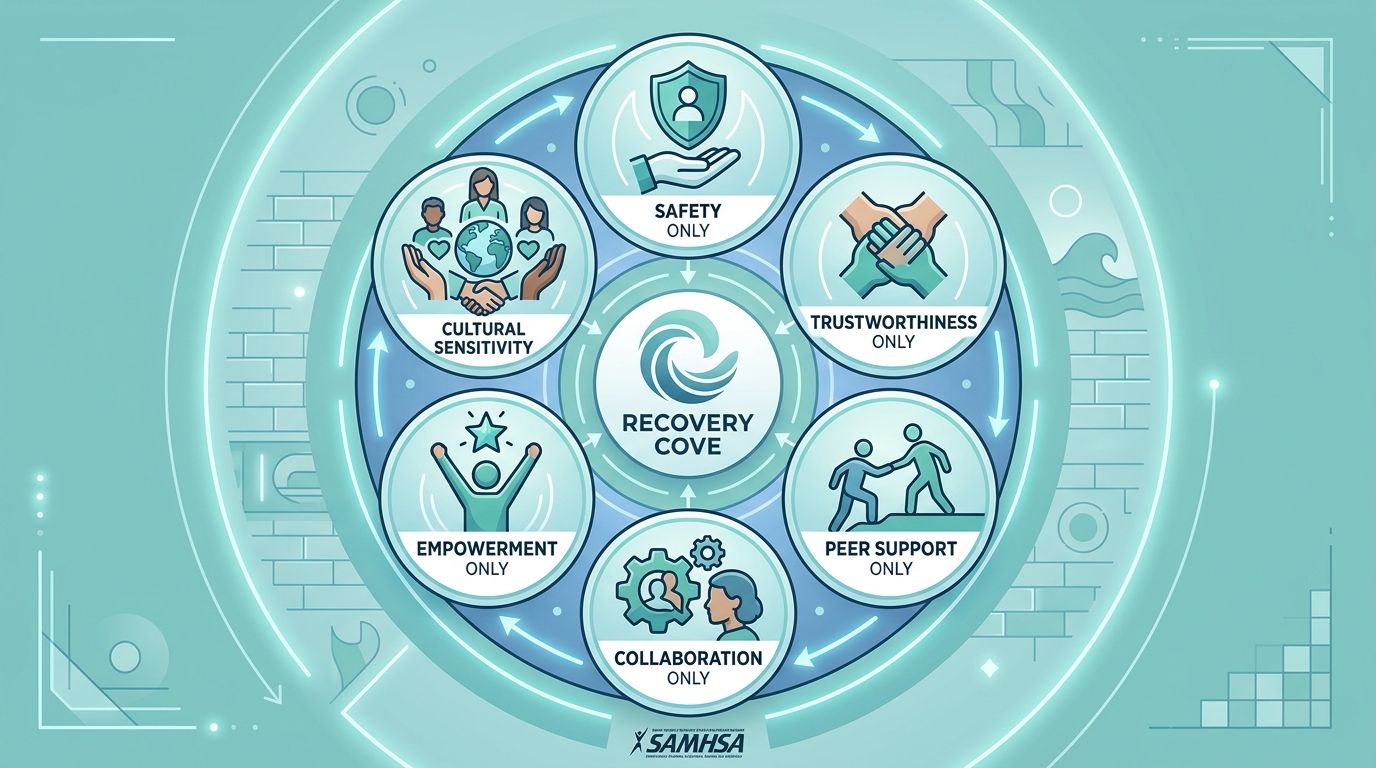
Six principles of trauma-informed care at Recovery Cove.
These principles shape every service—from our Partial Hospitalization Program (PHP) to individual therapy—forming the bedrock of our holistic approach. You are not alone and this is not the end of your story.
Results may vary. Consult a healthcare professional for diagnosis and treatment recommendations.
Our trauma therapy for addiction provides the tools you need for lasting healing. This compassionate approach supports all our programs, including the first responder track and dual-diagnosis treatment, which we’ll explore next.
6. Accessing Specialized Programs in Pennsylvania
Building on the outpatient services discussed earlier, first responders in Pennsylvania can turn to Recovery Cove for specialized care. Our First Responder Program is tailored for police, fire, EMS, and other emergency personnel, beginning with medication assisted treatment for first responders. This includes opioid treatment for emergency responders as a core element of our MAT approach.
We address the unique stressors and trauma from critical incidents and shift work through evidence-based therapies. Key features of the program include:
- Medication-Assisted Treatment (MAT) for substance use disorders
- Integrated dual diagnosis for first responders care for co-occurring mental health conditions
- Flexible scheduling to accommodate demanding shift rotations
State resources such as mental health hotlines and wellness initiatives also support first responder wellness. Our team keeps care confidential, culturally competent, and accessible—we verify your insurance and can discuss financial options. Reach out for a confidential assessment. Results may vary.
Your Path to Recovery Starts Here
Seeking help is an act of courage, and we want you to know that effective, compassionate care is within reach. Medication assisted treatment for first responders offers a proven path to stability, helping to manage withdrawal symptoms and cravings so you can focus on healing. You are not alone and this is not the end of your story.
At Recovery Cove, our specialized First Responder Program provides a safe space to address the unique stressors of your profession. We believe in treating the whole person through a combination of evidence-based therapies and support for co-occurring conditions, including dual diagnosis for first responders. Understanding your rights is also a key step, and Pennsylvania mental health parity laws help ensure access to the care you deserve.
For those facing opioid dependency, our opioid treatment for emergency responders is integrated into a comprehensive plan designed to rebuild resilience. Should you need additional guidance, the Substance Abuse and Mental Health Services Administration (SAMHSA) offers a national helpline and treatment locator to connect you with vital resources. We are here to help you heal, grow, and connect so you can truly live.
Results may vary.
Resources
- Find Specialized Outpatient Care for First Responders
- Find First Responder Support Groups and Trauma-Informed Care
- Get First Responder Addiction and PTSD Treatment
- Learn About First Responder Outpatient and Virtual Care
- Access First Responder Mental Health Program with Insurance
- Find Flexible First Responder Treatment with Telehealth
- Explore Recovery Cove First Responder Program Details
- Discover SAMHSA Mental Health and Substance Use Resources
- Discover Pennsylvania Mental Health Parity Laws and Services