Table of Contents
Outpatient Addiction Recovery Trends Shaping 2026
As we look ahead, several outpatient addiction recovery trends are reshaping how care is delivered. A leading shift is toward integrated dual diagnosis treatment, which addresses substance use and co-occurring mental health conditions simultaneously. We are also seeing a growing emphasis on trauma-informed outpatient care, recognizing that healing from past trauma is essential for lasting recovery.
Flexible program models like our PHP and IOP are expanding to meet people where they are, while medication-assisted treatment (MAT) remains a cornerstone of evidence-based care. At Recovery Cove, these outpatient addiction recovery trends guide our holistic approach. For those seeking substance abuse treatment in Easton, Pennsylvania, we provide comprehensive support tailored to your journey. These developments point toward a more compassionate and effective future in addiction care.
1. Telehealth Expanding Access and Engagement
Telehealth has rapidly emerged as a cornerstone of outpatient addiction recovery trends, transforming how individuals access and engage with treatment. At Recovery Cove, we believe in treating the whole person through our holistic approach, and telehealth expands that reach significantly. By removing geographic and scheduling barriers, virtual services ensure that more people can connect with life-changing care. As the Substance Abuse and Mental Health Services Administration (SAMHSA) has recognized, telehealth is a valuable and effective modality for substance use disorder treatment, and we’ve seen firsthand how it allows us to be present for our clients exactly when they need us.
How Telehealth Is Reshaping Rehab
This technology does more than just offer convenience; it reshapes the very structure of rehab by enabling continuous care and reducing the burden of travel. This is crucial for providing a full continuum of support. Through our virtual platform, we seamlessly integrate integrated dual diagnosis treatment to address co-occurring mental health conditions and offer trauma-informed outpatient care, ensuring sensitive, whole-person healing. This evolution in care delivery allows individuals to maintain their work and family commitments while actively participating in their recovery journey, reinforcing our belief that Heal. Grow. Connect. Live. is achievable for everyone.
Practical Tip: Maximizing Telehealth Benefits
To get the most out of your virtual sessions, preparation is key. Find a private, distraction-free space and ensure you have a stable internet connection. This simple step helps create the safe therapeutic container necessary for effective work, whether you are connecting with us from home or seeking information about drug rehab centers in Pennsylvania. Remember, You are not alone and this is not the end of your story. We are here to guide you through every step. Let’s explore how these innovations are specifically improving specific elements of treatment.
2. Integrated Behavioral Health Becoming Standard Care
The Shift Toward Whole-Person Treatment
Among the most significant outpatient addiction recovery trends, integrated behavioral health is becoming the standard model for outpatient addiction care. This approach coordinates treatment for substance use disorders and co-occurring mental health conditions within a single program. The American Hospital Association cites integrated care as a leading outpatient addiction recovery trend, moving from exception to norm. Research shows whole-person treatment improves engagement and long-term recovery outcomes. By addressing the physical, emotional, and psychological dimensions of addiction simultaneously, whole-person treatment helps individuals achieve more stable recovery.
Practical Example: Dual Diagnosis Integration at Recovery Cove
To see this model in action, consider Recovery Cove’s dual diagnosis program. At Recovery Cove, we provide integrated dual diagnosis treatment, combining CBT, MAT, and trauma-informed outpatient care. This unified model allows clients to address both substance use and mental health challenges without navigating fragmented services. Key elements:
- Evidence-based therapies and holistic modalities.
We believe in treating the whole person. Our Joint Commission, SAMHSA, and PA DDAP accreditations support this evidence-based approach. Results may vary. Consult a healthcare professional. You are not alone and this is not the end of your story. Heal. Grow. Connect. Live.
3. Trauma-Informed Outpatient Care as Foundation
As we build on a holistic understanding of recovery, it’s crucial to examine a framework that is shaping current outpatient addiction recovery trends. At Recovery Cove, we believe in treating the whole person, and this starts with trauma-informed care. Unresolved trauma is often the root cause of substance use disorders, meaning effective treatment must do more than address the addiction itself. This approach shifts the central question from “What’s wrong with you?” to “What happened to you?” fostering an environment of safety and understanding rather than judgment.
Why Trauma-Informed Care Matters
The Substance Abuse and Mental Health Services Administration (SAMHSA) outlines a trauma-informed framework built on six core principles: Safety, Trustworthiness, Peer Support, Collaboration, Empowerment, and Cultural, Historical, and Gender Issues. This framework helps our team realize the widespread impact of trauma, recognize signs in clients, and respond by integrating this knowledge into practice. The ultimate goal is to actively resist re-traumatization. By focusing on these principles, trauma-informed care in an outpatient setting significantly improves client engagement and helps reduce dropout rates, making it a vital foundation for lasting recovery. This foundation is also essential for providing integrated dual diagnosis treatment, as it allows us to safely and simultaneously address co-occurring trauma and substance use.
Practical Example: Integrating Trauma Therapy
We weave trauma-informed outpatient care directly into a client’s schedule, respecting their personal pace and sense of safety. Heal. Grow. Connect. Live. is not just a motto; it is a process that unfolds weekly. A client’s schedule might look like this:
- Monday: Group therapy session (90 minutes)
- Wednesday: Individual counseling (60 minutes)
- Thursday: Integrated trauma therapy session (60 minutes)
This structure shows that trauma therapy is not an add-on but a core, integrated part of the healing journey, reminding every individual that you are not alone and this is not the end of your story. Our approach seamlessly links into the more specific therapeutic modalities that build upon this foundation.
4. Continuum of Care Models Expand Flexibility
As modern treatment prioritizes person-centered care, outpatient addiction recovery trends in 2026 spotlight the stepped care model—a flexible framework that adjusts intensity based on individual needs. This approach allows you to move seamlessly between levels, ensuring support evolves with your recovery journey.
The Rising Importance of Leveled Care
A stepped care model spans PHP, IOP, and outpatient levels, each with distinct time commitments and support structures. PHP delivers structured full-day therapy, IOP reduces session hours, and outpatient focuses on maintenance. This patient-centered approach lets you adjust intensity as needs change—stepping down when stable or up during crises—preserving therapeutic continuity. In 2026, such flexibility is a cornerstone of outpatient addiction recovery trends, reducing relapse risk by meeting people where they are.
Practical Example: Recovery Cove’s Continuum
At Recovery Cove, our substance abuse treatment in Easton, Pennsylvania spans PHP, IOP, and outpatient levels, so you stay with the same team as needs shift. We weave integrated dual diagnosis treatment and trauma-informed outpatient care into all phases, treating the whole person while offering evening IOP for flexibility. Results may vary; consult a healthcare professional for diagnosis and treatment recommendations.
5. Virtual IOP Programs Compete With In-Person Care
As outpatient addiction recovery trends continue to evolve, virtual Intensive Outpatient Programs (IOP) are emerging as a flexible option for treating substance use disorder. Virtual IOP delivers the same evidence-based therapies — like cognitive behavioral therapy and medication-assisted treatment — without the commute, making it ideal for those balancing work or family.
How Virtual IOP Measures Up
Virtual IOP offers comparable effectiveness to in-person care, with research suggesting similar outcomes when provided by a therapeutic program. At Recovery Cove, our virtual IOP integrates the same trauma-informed outpatient care and integrated dual diagnosis treatment as our on-site sessions, ensuring you receive comprehensive support. The flexibility of remote sessions reduces barriers, while in-person care may provide stronger face-to-face accountability.
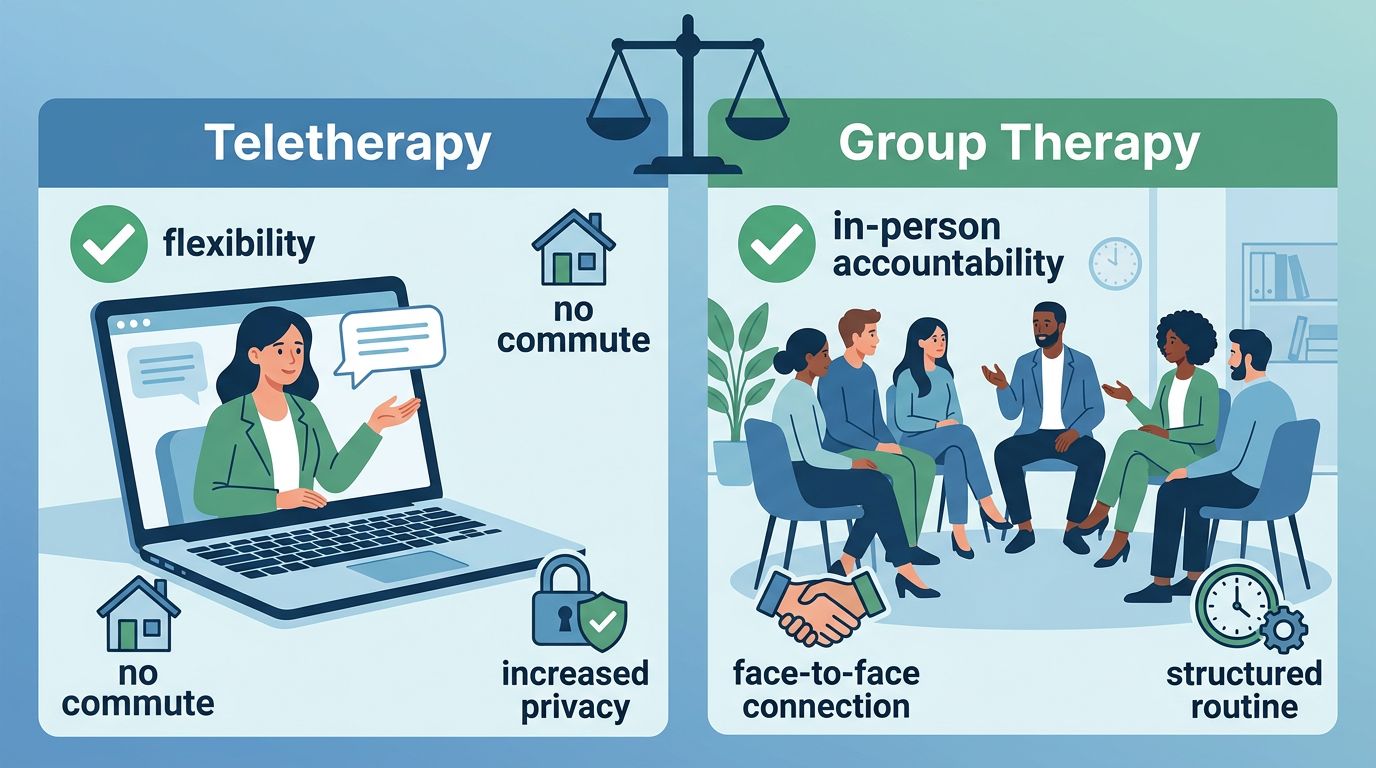
Virtual vs in-person IOP comparison highlighting flexibility, accountability, and privacy features.
We believe in treating the whole person, not just the disorder, and both formats let us do that. (Results may vary.)
Practical Tip: Choosing Between Virtual and In-Person
- Tech comfort: Do you have reliable internet and a private space?
- Support at home: Is your environment conducive to healing?
- Severity: In-person structure may benefit those needing more containment.
- Personal preference: Some thrive in a group room; others open up better online.
Our team is here to help you weigh these factors and find the best fit. You are not alone — let’s explore how our programs can work for you, including next steps on insurance and enrollment.
6. Holistic and Trauma-Informed Approaches Integrate Fully
As outpatient addiction recovery trends continue to evolve in 2026, we see a powerful convergence of holistic and trauma-informed methods—approaches that meet individuals exactly where they are and treat the whole person: mind, body, and spirit. This integration is shaping modern outpatient care.
The Whole-Person Movement
Holistic treatment goes beyond symptom reduction; it addresses emotional, physical, and spiritual well-being alongside evidence-based therapies. Trauma-informed outpatient care provides a framework that recognizes the lasting effects of trauma and weaves safety, trust, and empowerment into every interaction. In 2026, these two philosophies are merging because clients expect care that heals underlying wounds while strengthening overall wellness. This natural alignment also enhances our ability to deliver integrated dual diagnosis treatment, ensuring that co-occurring mental health conditions never stand in the way of healing.
Practical Example: Holistic Modalities at Recovery Cove
We offer yoga, mindfulness exercises, art therapy, and nutritional counseling within our outpatient programs. Recovery Cove highlights these modalities as essential complements to core therapies like CBT and medication-assisted treatment. Together, they nurture resilience and support lasting recovery without making cure claims. By embracing the whole person, we help each individual reconnect with purpose—living out the belief that they can truly heal, grow, connect, and live.
Your Path Forward With 2026 Outpatient Trends
Looking ahead to 2026, outpatient addiction recovery trends highlight the growing importance of integrated dual diagnosis treatment and trauma-informed outpatient care. At Recovery Cove, our drug rehab centers in Pennsylvania offer these evidence-based approaches.
Our flexible outpatient programs, including PHP and IOP, let you balance healing with work and family responsibilities. We know that seeking help is a courageous step, and we’re here to walk with you.
You are not alone and this is not the end of your story. Heal. Grow. Connect. Live. encapsulates our commitment to your recovery journey. We tailor our evidence-based treatments to your unique needs, combining holistic and clinical approaches. If you’re ready to explore trauma-informed outpatient care, reach out to our team today. Results may vary. Consult a healthcare professional for diagnosis and treatment recommendations.
Resources
- Find Comprehensive Outpatient Substance Abuse and Mental Health Treatment
- Find Outpatient Drug Rehab with Dual Diagnosis in Pennsylvania
- Get Comprehensive Substance Use Disorder Treatment with Family Support
- Learn About Substance Use Disorder and Medication-Assisted Treatment
- Discover Outpatient Substance Use Disorder Treatment with PHP and IOP
- Find Integrated Care for Substance Use and Co-Occurring Disorders
- Get Comprehensive Addiction and Mental Health Programs in Pennsylvania
- Access SAMHSA Resources for Substance Use and Mental Health
- Explore AHA Resources on Integrated Behavioral Health and Policy