Table of Contents
Why Family Involvement in Dual Diagnosis Recovery Matters
At Recovery Cove, we believe family involvement in dual diagnosis recovery isn’t just helpful — it’s a vital part of the healing journey.
When someone faces both a mental health condition and a substance use disorder. But the presence of a caring family can change the entire dynamic of treatment.
We see families as partners, not bystanders, in the recovery process. This connection offers emotional grounding and quiet encouragement that clinical care alone can’t always provide.
Understanding what co-occurring disorders are is the first step toward understanding why family involvement matters so deeply. In the pages that follow, we’ll explore practical ways loved ones can contribute to recovery while honoring their own well-being, too. Heal. Grow. Connect. Live. It all begins here, together.
1. Understanding Co-Occurring Disorders
When a person lives with both a substance use disorder and a mental health condition—such as anxiety, depression, or trauma-related concerns—it’s called a co-occurring disorder, also known as dual diagnosis. The two conditions often interact in powerful ways. Sometimes mental health challenges lead to substance use as a way to cope; other times, substance use can bring on or intensify mental health symptoms. Because they are deeply connected, both deserve attention in any recovery plan.
Treating only one condition while ignoring the other rarely leads to lasting wellbeing. That’s why dual diagnosis treatment for co-occurring disorders in the Lehigh Valley takes a whole-person approach, addressing mental, emotional, and physical needs together. If someone you care about is facing this, please know: You are not alone and this is not the end of your story. Understanding co-occurring disorders is the first step toward helping a loved one heal. In the next section, Opening the Lines of Communication, we’ll explore practical conversation strategies families can use.
2. Opening the Lines of Communication
Understanding that co-occurring disorders affect both mental health and substance use naturally leads families to ask: How do I start the conversation? The answer begins with recognizing that silence often grows from shame and fear of judgment — your loved one may worry they’ll be blamed, misunderstood, or pushed away. That’s why the most powerful first step you can take is to create a calm, judgment-free space.
When families learn to spot signs of dual diagnosis in adults, they gain the clarity to approach the conversation with empathy instead of accusation. Open, loving dialogue also reveals how integrated care for mental health and addiction treats both conditions together — not as separate struggles, but as interconnected pieces of the whole person. We believe in treating the whole person, and that conviction shapes every conversation we encourage families to have.
With trust as the foundation, practical communication techniques become the bridge forward. In the next section, we’ll share concrete ways to keep the dialogue open and supportive.
3. Effective Communication Strategies
Once the lines of communication are open, we can turn toward how to talk to one another in ways that heal rather than hurt. At Recovery Cove in Easton, we see communication as one element of our holistic approach to whole-person recovery.
Use “I feel…” statements. Instead of saying “You never care about your recovery,” try “I feel worried when you skip your appointment because I care about you.”
Listen to understand, not to fix. Active listening means making eye contact, reflecting back what you hear — starting with “What I’m hearing is…” — and asking open-ended questions like “What would be helpful from me right now?”
Avoid absolutes and focus on behavior. Words like “always” and “never” trigger defensiveness; describe the specific action so your loved one feels safe rather than attacked.
Choose a calm moment. Important conversations go better when both people are calm.
These skills aren’t one-time talks but ongoing habits that help create a stable, respectful home where everyone feels heard and valued.
4. Building a Supportive Home Environment
The communication skills we practice with our loved one become more powerful when they shape our home environment. By making a few thoughtful, evidence-based adjustments, we can create a calm, predictable space that recovery depends on. Here are practical steps we can take:
- Remove triggers. We lock away alcohol, unused medications, and other substances.
- Set a daily rhythm. We keep consistent meal times, wake/sleep schedules, and quiet hours—predictability lowers stress and supports healing.
- Designate a therapy spot. We choose a clutter-free area for telehealth or journaling, with a notepad and pen close by.
- Post a crisis plan. We list therapist, sponsor, crisis line, and emergency numbers where everyone can see them.
- Educate the household. We join family therapy or explore trusted resources to learn about dual diagnosis and replace blame with compassion.
A supportive home doesn’t cure anything, but it gives recovery room to grow. With this foundation in place, we can encourage the next piece: treatment engagement and medication adherence.
5. Encouraging Treatment Engagement and Medication Adherence
At Recovery Cove, we see medication assisted treatment for addiction as an evidence-based way to reduce cravings and support progress.
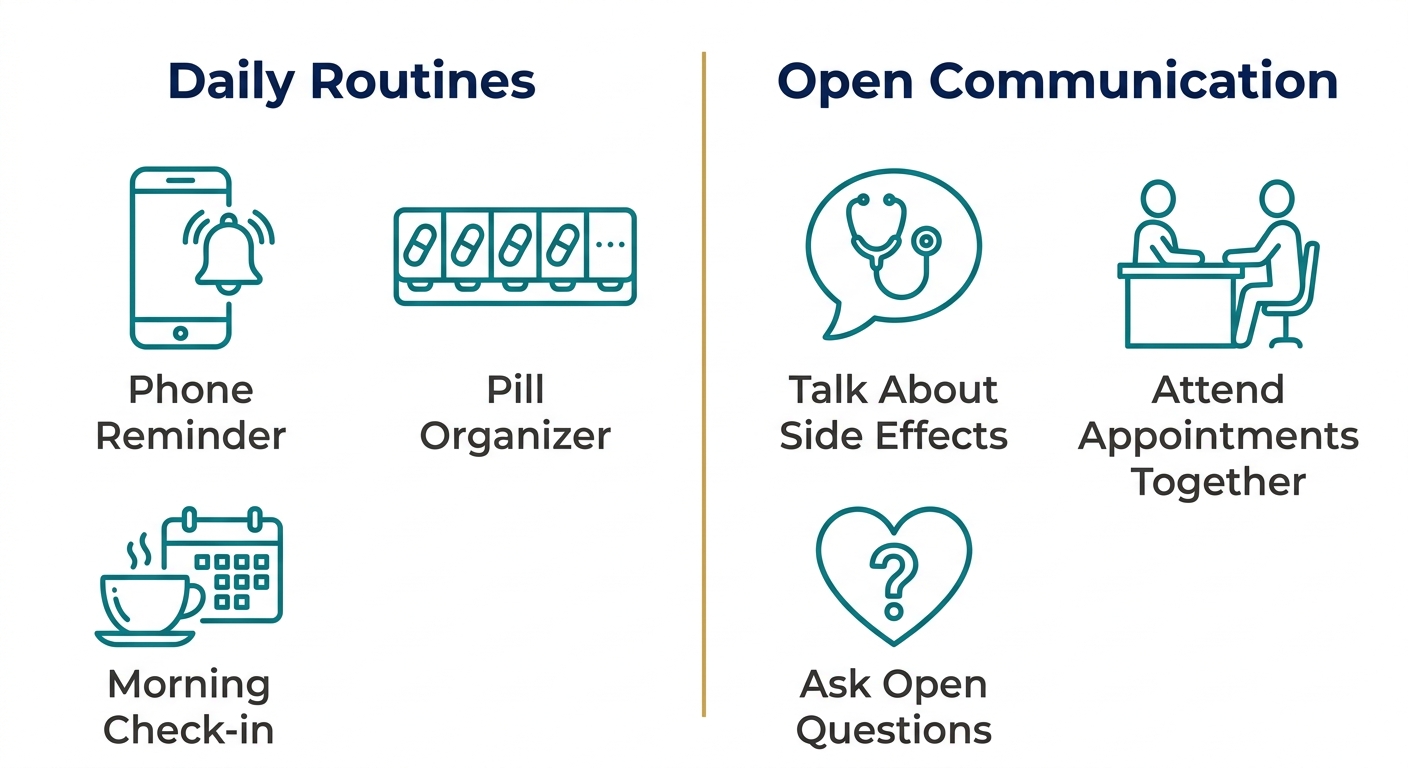
Joining appointments and check-ins with our loved one’s consent reinforces accountability. Our flexible outpatient schedules — PHP, IOP, and evening options — make staying involved easier while keeping daily life in Easton and in the Lehigh Valley.
Build a consistent medication routine:
- Set phone reminders.
- Use a pill organizer.
We keep conversations open about side effects so our loved one feels safe raising concerns instead of skipping doses.
We’ll explore therapies next.
6. Educating Yourself on Dual Diagnosis Therapies
After encouraging treatment engagement and medication adherence, the next step is for us as family members to learn about the therapies.
Dual diagnosis means that a person has both a mental health condition and a substance use disorder, and integrated care treats both at the same time with the same team. This approach improves outcomes and helps us understand what our loved one experiences.
We can start by learning about evidence-based therapies like cognitive-behavioral therapy (CBT), dialectical behavior therapy (DBT), motivational interviewing, and medication-assisted treatment (MAT). Recovery Cove delivers these in a holistic outpatient format (PHP/IOP). When evaluating a treatment program, look for Pennsylvania DDAP licensure, SAMHSA recognition, and Joint Commission accreditation. Bring questions about each therapy to the initial assessment.
We benefit from understanding common co-occurring conditions. Anxiety, depression, and schizophrenia treatment in Pennsylvania each interact differently with addiction, and educating ourselves about these connections helps us ask better questions during assessments. With this knowledge, we are prepared to move into setting healthy boundaries.
7. Setting Healthy Boundaries
After educating ourselves about dual diagnosis therapies, we can put that knowledge into practice by setting healthy boundaries. Boundaries are friendly limits that protect both a loved one’s recovery and our own well-being. For instance, we might calmly decline to lend money when it could support substance use, or choose not to cover up a missed appointment. Stepping away from heated arguments during active use is another boundary that keeps everyone safe and reduces stress.
We can communicate these limits with care, using statements like “I feel more comfortable helping when we talk about treatment plans.” Boundaries work best when we follow through consistently with calm, predictable responses — not as punishment, but as a steady act of support. This practice isn’t about controlling outcomes; it’s about showing up in a way that sustains everyone’s health. As we practice these skills, family therapy and support groups in our Easton area become places where we can reinforce them and find encouragement.
8. Participating in Family Therapy and Support Groups
Once families begin setting healthy boundaries, the next step in recovery is often learning how to participate together in therapy and support. At Recovery Cove in Easton, PA, we include family members as a vital part of our holistic, whole-person approach. Family therapy sessions give loved ones a chance to understand dual diagnosis and what the person in recovery is experiencing, while also improving communication and helping the family set shared expectations. This work can directly reduce enabling behaviors and build a more supportive home environment.
In our Lehigh Valley outpatient programs—including our Partial Hospitalization Program (PHP) and Intensive Outpatient Program (IOP)—family sessions can be integrated into the treatment schedule. We also offer family education groups, multi-family therapy, and connections to peer-led family support groups.
We encourage every family member to attend with an open mind. Recovery is a shared journey, not a responsibility any one person carries alone. By participating together now, you and your family lay the groundwork for lasting, whole-family recovery.
Building a Future of Recovery Together
Family therapy and support groups create a strong beginning, but recovery continues long after formal sessions end. Staying actively involved as a family helps your loved one feel connected and supported. Professional dual diagnosis treatment is within reach right here in the Lehigh Valley, and we’re ready to support you.
We see family involvement in dual diagnosis recovery as a cornerstone of lasting wellness. Whether you’re exploring outpatient options like our Partial Hospitalization Program or Intensive Outpatient Program, or simply want to verify your insurance, Recovery Cove is here to help. We walk with you every step of the way, because no family should face this journey alone. Results may vary, and this information is not a substitute for professional medical advice.
Take the Next Step Today
Now you’ve explored how family involvement can strengthen dual diagnosis recovery, from opening compassionate conversations to building a supportive home and setting healthy boundaries. The next step is turning that knowledge into action, and you don’t have to do it alone. Recovery Cove offers a welcoming environment and evidence-based outpatient programs designed for families. Visit our resources page for practical tools, educational guides, and local support information to continue the journey. Ready to help your loved one start healing? Call 484-549-2683 to talk with our team about treatment options. Real progress begins with a single, caring decision.